
Eupithecia longipalpata
Packard, 1876
Long-palp Pug
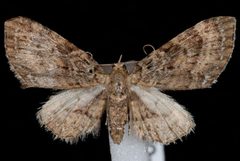
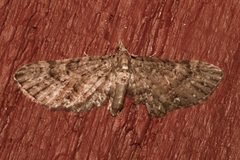
Eupithecia longipalpata is a of pug moth in the Geometridae, first described by Packard in 1876. It is distinguished from other members of the palpata group by its larger wingspan of 23–26 mm. The species occurs in western North America from coastal British Columbia south to northern California. Larvae feed exclusively on conifer needles, with documented spanning multiple including Abies, Pseudotsuga, Tsuga, Thuja, Picea, and Pinus.
Pronunciation
How to pronounce Eupithecia longipalpata: /juːpɪˈθɛsɪə lɒŋɡɪˈpælpətə/
These audio files are automatically generated. While they are not always 100% accurate, they are a good starting point.
Identification
can be distinguished from other Eupithecia in the palpata group by their larger wingspan (23–26 mm versus smaller dimensions in related species). Like other 'pug' in the , adults display a characteristic resting posture with narrow wings held flat or slightly folded. Definitive identification may require examination of genitalia, as is typical for many Eupithecia species.
Images
Habitat
Associated with coniferous forests. Larval indicate specificity to forests dominated by Abies, Pseudotsuga, Tsuga, Thuja, Picea, and/or Pinus .
Distribution
Western North America: coastal British Columbia south to northern California.
Diet
Larvae feed on needles of conifer : Abies grandis, Abies amabilis, Abies lasiocarpa, Pseudotsuga menziesii, Pseudotsuga menziesii var. glauca, Tsuga heterophylla, Tsuga mertensiana, Thuja plicata, Picea sitchensis, and Pinus contorta var. latifolia.
Host Associations
- Abies grandis - larval food plantGrand fir
- Abies amabilis - larval food plantPacific silver fir
- Abies lasiocarpa - larval food plantSubalpine fir
- Pseudotsuga menziesii - larval food plantDouglas-fir
- Pseudotsuga menziesii var. glauca - larval food plantRocky Mountain Douglas-fir
- Tsuga heterophylla - larval food plantWestern hemlock
- Tsuga mertensiana - larval food plantMountain hemlock
- Thuja plicata - larval food plantWestern redcedar
- Picea sitchensis - larval food plantSitka spruce
- Pinus contorta var. latifolia - larval food plantLodgepole pine
Life Cycle
Larval stage feeds on conifer needles. Full-grown larvae reach 20 mm length. Two color morphs are known in the larval stage. and timing are not documented in available sources.
Behavior
have been observed visiting apple flowers at night, indicating activity and potential nectar-feeding . This observation comes from a 2021 pollination study in Arkansas, though the ' native range is western North America.
Ecological Role
Larval herbivore on conifer needles. may contribute to pollination of flowering plants, as has been observed in apple orchards for Eupithecia generally.
Human Relevance
have been documented as visitors to apple flowers, suggesting potential role in orchard pollination. Not known to be an economic pest; larval feeding on conifer needles appears restricted to natural forest settings.
Similar Taxa
- Other Eupithecia in palpata groupShare narrow wing and resting posture; distinguished by smaller wingspan (less than 23 mm)
- Eupithecia species generallyAll share characteristic 'pug' appearance with narrow wings; -level identification typically requires genitalia examination
More Details
Etymology
Specific epithet 'longipalpata' refers to elongated palps, a distinguishing feature of this .
Taxonomic history
Described by Packard in 1876. Assigned to the palpata group within Eupithecia based on morphological affinities.