
Eupithecia harrisonata
MacKay, 1951
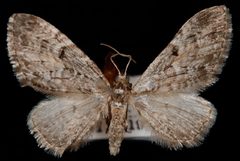
Eupithecia harrisonata is a small in the Geometridae, commonly known as a 'pug' moth. It occurs in western North America from British Columbia to California. are active in spring (March to May) and again in summer (July to August). Like other Eupithecia , it has been observed visiting flowers and may contribute to pollination.
Pronunciation
How to pronounce Eupithecia harrisonata: //juːˈpɪθiə ˌhærɪsəˈneɪtə//
These audio files are automatically generated. While they are not always 100% accurate, they are a good starting point.
Identification
Members of the Eupithecia are recognized by their narrow wings and unique resting posture. -level identification within this genus is extremely difficult and typically requires examination of genitalia characters under a microscope. Eupithecia harrisonata cannot be reliably distinguished from by external appearance alone.
Images
Appearance
are small with narrow, elongated wings characteristic of the Eupithecia. Resting posture involves wings held flat or slightly folded, often with a distinctive triangular or tent-like profile. Coloration and pattern details specific to this are not documented in available sources.
Habitat
Specific associations for this are not documented. Based on its geographic range, it likely occurs in varied environments of western North America including coastal and montane regions.
Distribution
Western North America, from British Columbia south to California.
Seasonality
are active from March to May and again from July to August.
Behavior
are and attracted to light. A Eupithecia , potentially this , was photographed visiting apple flowers at night, suggesting possible nocturnal flower visitation .
Ecological Role
May contribute to pollination of flowering plants, as evidenced by observations of Eupithecia visiting apple blossoms. The ecological role of larvae is unknown.
Similar Taxa
- Other Eupithecia speciesAll 'pug' share narrow wings and similar resting posture; require genitalia examination for definitive identification.
More Details
Taxonomic note
described by MacKay in 1951. The Eupithecia is one of the largest genera of , with many species difficult to distinguish without specialized examination.