
Eupithecia gilvipennata
Cassino & Swett, 1922
Eupithecia gilvipennata is a small geometrid first described in 1922. It occurs along the North American Pacific coast from British Columbia southward through Colorado to California and Arizona. The is notable for its very early spring period and larval specialization on Arctostaphylos species. have been documented visiting apple flowers, contributing to pollination services.
Pronunciation
How to pronounce Eupithecia gilvipennata: /juːˈpɪθiə ˌɡɪlviˈpɛnətə/
These audio files are automatically generated. While they are not always 100% accurate, they are a good starting point.
Identification
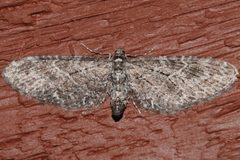
Members of Eupithecia are recognized by their narrow wings and distinctive resting posture with wings held flat and tightly appressed to the substrate. -level identification within this large typically requires examination of genitalia characters. E. gilvipennata can be distinguished from other western North American Eupithecia by its very early spring period (February-March in central California, April-May farther north) and association with Arctostaphylos plants.
Images
Appearance
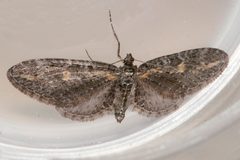
A small with wingspan approximately 25 mm. As a member of the Eupithecia, it possesses the characteristic narrow wings and slender body typical of 'pug' moths. The name 'gilvipennata' (from Latin 'gilvus' meaning pale yellow and 'pennata' meaning winged) suggests pale yellowish wing coloration, though specific pattern details require specimen examination.
Habitat
Found in coastal and montane regions of western North America. The type locality and distribution suggest association with Mediterranean-type scrub, chaparral, and mixed conifer-oak woodland where Arctostaphylos occur.
Distribution
North American Pacific coast from British Columbia south through Colorado to California and Arizona. Distribution follows the range of its Arctostaphylos plants in western montane and coastal regions.
Seasonality
fly very early in spring: late February to early March in central California, and late April to early May farther north. This represents one of the earliest periods among North American Eupithecia .
Diet
Larvae feed on flowers and fruits of Arctostaphylos (Ericaceae), including A. pungens, A. manzanita, and A. viscida. feeding habits are not documented, though Eupithecia adults have been observed visiting flowers including apple blossoms.
Host Associations
- Arctostaphylos pungens - larval flowers and fruits consumed
- Arctostaphylos manzanita - larval flowers and fruits consumed
- Arctostaphylos viscida - larval flowers and fruits consumed
Life Cycle
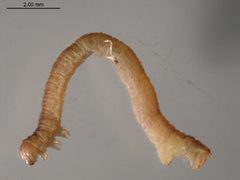
Complete with , larva, pupa, and stages. Larvae feed on reproductive structures of Arctostaphylos. likely occurs in soil or leaf litter. Adults emerge in early spring, with timing varying by latitude and elevation.
Behavior
are and attracted to light. They have been documented as flower visitors, with photographic records showing Eupithecia on apple blossoms. The early spring period is notable and may represent an to exploit early-blooming plants.
Ecological Role
Larva functions as a herbivore on Arctostaphylos. contribute to pollination; Eupithecia have been identified among night-flying of apple orchards in research studies. The species serves as prey for , with at least one braconid wasp (Bassus sp.) documented using Eupithecia caterpillars as .
Human Relevance
Documented as a of apple flowers in agricultural research, suggesting potential value in orchard pollination services. No known negative economic impacts.
Similar Taxa
- Other Eupithecia speciesNumerous congeneric occur in western North America; distinguished by period, association, and genitalia characters
- Other Larentiinae mothsSimilar size and general appearance; Eupithecia distinguished by narrow wings and characteristic resting posture
More Details
Etymology
name derived from Latin 'gilvus' (pale yellow) and 'pennata' (winged), referring to wing coloration.
Taxonomic history
Described by Samuel E. Cassino and Louis W. Swett in 1922, both prominent early 20th century American lepidopterists.
Research significance
Eupithecia , including this , have been specifically photographed and cited in peer-reviewed research on pollination in apple production (Robertson et al., 2021, Journal of Economic Entomology), highlighting underappreciated services provided by moths generally considered economically unimportant.