
Eupithecia cimicifugata
Pearsall, 1908
Eupithecia cimicifugata is a small in the Geometridae, first described by Pearsall in 1908. It is one of numerous 'pug' moths in the Eupithecia, characterized by narrow wings and a distinctive resting posture. The has been documented as a visitor to apple flowers, contributing to pollination services in agricultural settings. Larvae feed specifically on the fruit of Cimicifuga racemosa (black cohosh).
Pronunciation
How to pronounce Eupithecia cimicifugata: //juːpɪˈθiːsia saɪmɪˌsɪfjuːˈɡeɪtə//
These audio files are automatically generated. While they are not always 100% accurate, they are a good starting point.
Identification
Members of the Eupithecia ('pugs') are recognized by their narrow wings and unique resting posture with wings held flat. -level identification within this large genus typically requires examination of genitalia or other microscopic characters. Eupithecia cimicifugata may be distinguished from similar species by association with its specific larval plant, Cimicifuga racemosa, and by geographic distribution.
Images
Appearance
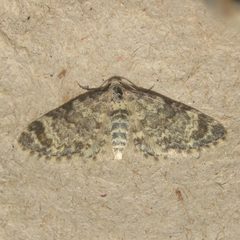
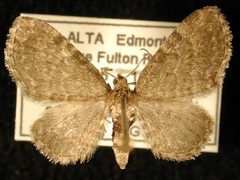
Narrow-winged with typical Eupithecia 'pug' : wings held flat and overlapping at rest, slender body. Specific coloration and pattern details for this are not well documented in available sources.
Habitat
Associated with areas supporting the larval plant Cimicifuga racemosa (black cohosh), which grows in deciduous forest understories. have been observed at light traps in dry, mixed conifer forest with oaks at approximately 7,000 feet elevation. Also documented in agricultural settings, specifically apple orchards, where adults visit flowers at night.
Distribution
North America. Documented from Alberta, Ontario, Saskatchewan, Manitoba (Canada); Kentucky, Maryland, South Dakota (United States).
Diet
Larvae feed on the fruit of Cimicifuga racemosa (black cohosh). feeding habits are not specifically documented for this , though Eupithecia have been observed visiting apple flowers at night, presumably for nectar.
Host Associations
- Cimicifuga racemosa - larval larvae feed on fruit
Behavior
. are attracted to light. Has been documented visiting apple flowers at night, contributing to nocturnal pollination.
Ecological Role
Larval herbivore on Cimicifuga racemosa fruit. potentially contributes to pollination of apple and other flowering plants as a flower visitor.
Human Relevance
Documented as a participant in pollination of apple crops in Arkansas, suggesting potential value as an service provider in agricultural settings. Not known to be a pest .
Similar Taxa
- Other Eupithecia speciesAll share narrow 'pug' wing shape and similar resting posture; -level identification requires detailed examination
More Details
Pollination Research
A Eupithecia , likely including E. cimicifugata or , was photographed and documented as a visitor to apple flowers in a 2021 study on apple pollination in Arkansas, highlighting the underappreciated role of geometrid moths in crop pollination.