Chloropteryx paularia
(Möschler, 1886)
Fulsome Emerald
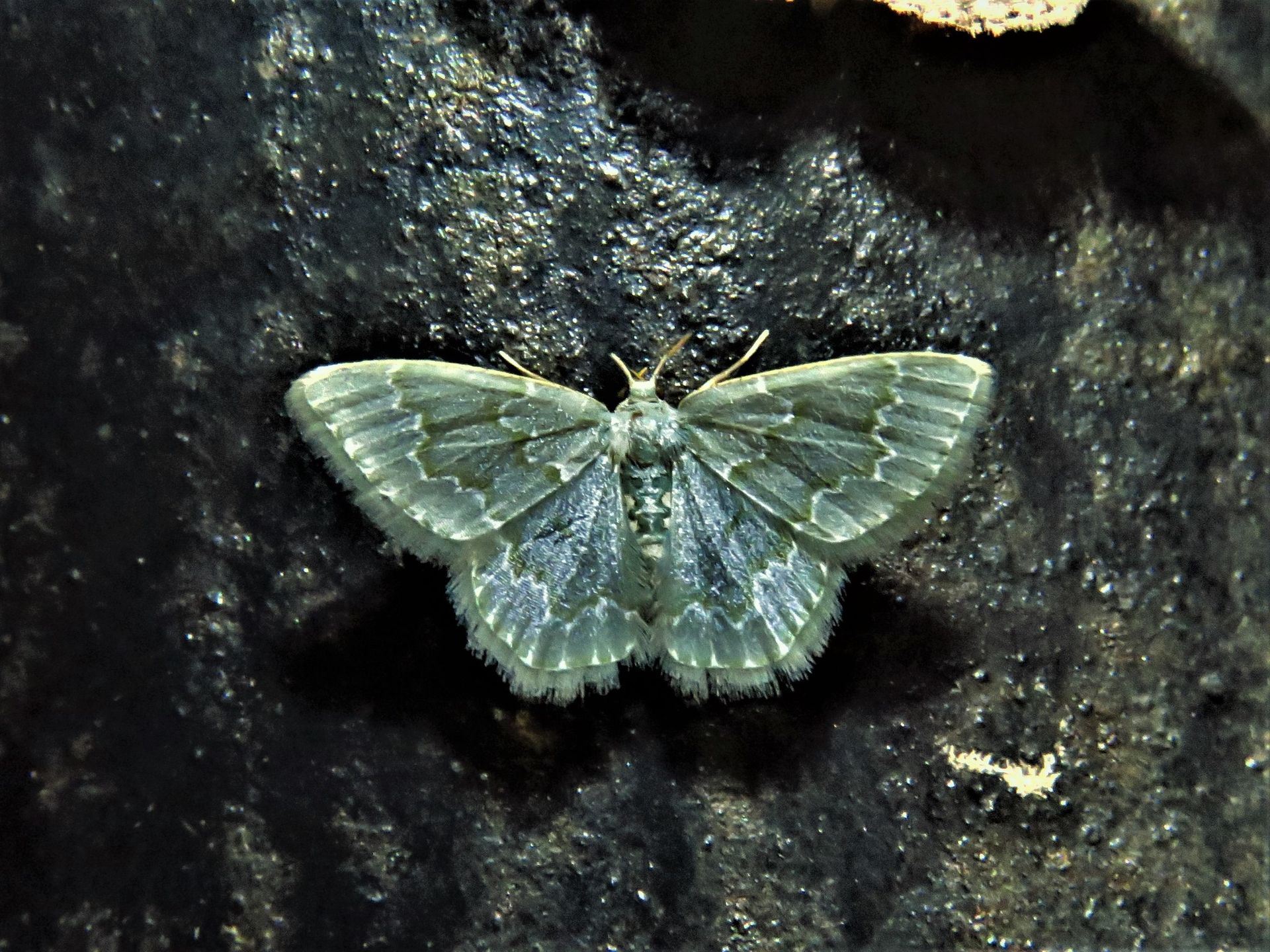
Chloropteryx paularia, commonly known as the Fulsome Emerald, is a small geometrid with a wingspan of approximately 16 mm. First described by Möschler in 1886, this is restricted to Florida and the Greater Antilles. The larvae are known to feed on wax myrtle (Myrica cerifera).
Pronunciation
How to pronounce Chloropteryx paularia: /klɔːroʊˈpterɪks paʊˈlɑːriə/
These audio files are automatically generated. While they are not always 100% accurate, they are a good starting point.
Identification
The small size (16 mm wingspan) and geographic restriction to Florida and the Greater Antilles help distinguish this from other North American emerald . Definitive identification likely requires examination of genitalia or molecular confirmation.
Images
Appearance
A small emerald moth with wingspan approximately 16 mm. As a member of the Geometrinae (emerald moths), likely display green coloration typical of the , though specific markings are not well documented in available sources.
Habitat
Associated with coastal and wetland where the larval plant Myrica cerifera (wax myrtle) occurs. Wax myrtle typically grows in moist soils, pine barrens, and coastal dunes.
Distribution
Found in the U.S. state of Florida and throughout the Greater Antilles (Cuba, Hispaniola, Puerto Rico, Jamaica, and the Cayman Islands).
Diet
Larvae feed on Myrica cerifera (wax myrtle). feeding habits are not documented.
Host Associations
- Myrica cerifera - larval food plantWax myrtle; a shrub native to southeastern North America and the Caribbean
Ecological Role
As a herbivore in larval stage, contributes to nutrient cycling and energy transfer in coastal and wetland where wax myrtle dominates.
Similar Taxa
- Other Chloropteryx speciesSeveral Chloropteryx occur in the southeastern United States; C. paularia is distinguished by its smaller size and more restricted Caribbean-Florida distribution.
- Nemoria speciesFormerly classified in Nemoria (basionym Nemoria paularia); these emerald moths share similar green coloration and small size, requiring careful examination for separation.
More Details
Taxonomic History
Originally described as Nemoria paularia by Möschler in 1886, later transferred to the Chloropteryx. The genus Chloropteryx is part of the emerald moth Geometrinae, characterized by typically green-colored .
Conservation Status
Not formally assessed; appears to be locally common in its restricted range based on 89 iNaturalist observations, though loss in Florida coastal areas may pose localized threats.