Plataea californiaria
Herrich-Schäffer, 1856
California granite moth
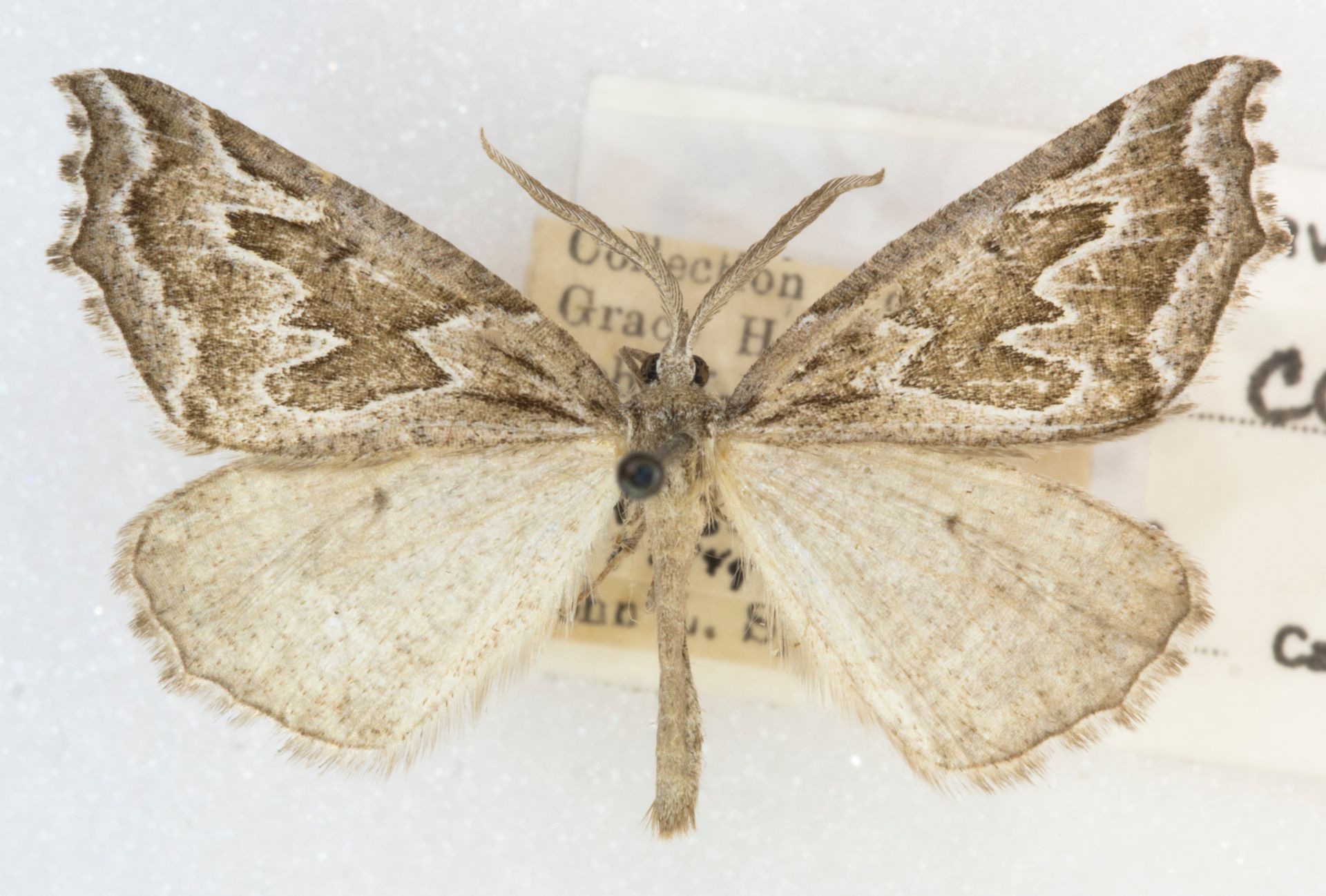
Plataea californiaria is a geometrid first described by Herrich-Schäffer in 1856. It is commonly known as the California granite moth and was previously placed in the Digrammia. The species is found in North America, with records concentrated in California. It has been observed in high numbers at light traps in some years.
Pronunciation
How to pronounce Plataea californiaria: //pləˈtiːə ˌkælɪˌfɔːrniˈɛriə//
These audio files are automatically generated. While they are not always 100% accurate, they are a good starting point.
Identification
Previously classified under Digrammia; separation from Digrammia muscariata and other granite moths requires examination of wing pattern details and genitalia. The 'California granite moth' refers to its mottled gray patterning that resembles granite rock surfaces.
Images
Distribution
North America; confirmed records from California.
Seasonality
have been recorded in July, with observations suggesting peak activity during summer months.
Diet
Larvae have been observed feeding on Lotus ; additional plants may exist but are not documented.
Host Associations
- Lotus - larval food plantConfirmed ; extent of host range unclear
Behavior
are attracted to ultraviolet light sources. Has been recorded in large numbers at backyard blacklight setups in some years.
Human Relevance
Subject of public interest during National Week events; featured in museum outreach activities at the Bohart Museum of Entomology.
Similar Taxa
- Digrammia muscariataSimilar granite moth appearance; historically confused with P. californiaria before taxonomic revision moved californiaria to Plataea
More Details
Taxonomic history
The was long treated as Digrammia californiaria before being transferred to Plataea. Some sources, including the Photographers' Group, continued to use the Digrammia combination at least through 2019.
Observation records
As of the data provided, iNaturalist contained 131 research-grade observations of this .