
Nepytia phantasmaria
(Strecker, 1899)
phantom hemlock looper
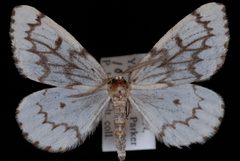
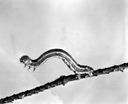
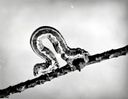
Nepytia phantasmaria is a geometrid native to North America, described by Herman Strecker in 1899. It is commonly known as the phantom hemlock looper. The is part of the looper moth group, with larvae that are defoliators of conifer foliage. Its activity patterns have been studied in relation to environmental conditions, showing associations with sunset and sunrise periods.
Pronunciation
How to pronounce Nepytia phantasmaria: /nɛˈpɪt.iə fænˌtæzˈmɛə.riə/
These audio files are automatically generated. While they are not always 100% accurate, they are a good starting point.
Identification
The MONA or Hodges number for this is 6907. As a member of the Nepytia, it can be distinguished from related species by morphological features and geographic distribution, though specific diagnostic traits for N. phantasmaria require examination of specimens.
Images
Distribution
North America. GBIF records also indicate presence in Belgium, though these may represent introduced or misidentifications.
Seasonality
fly during autumn nights. Larvae are present in summer and have been observed to be active on warm days with limited cold resistance.
Life Cycle
Larval development occurs during summer months. emerge and fly in autumn, with beginning in dark hours and particularly associated with sunrise.
Behavior
Larval activity on foliage, , and adult are associated with sunset. begins in dark hours but is particularly associated with sunrise. Larvae are generally more active on warm days and have little resistance to cold. Activity is less influenced by low temperatures near sunset than late in the night.
Ecological Role
Defoliator of conifer forests.
Similar Taxa
- Nepytia janetaeRelated conifer-feeding looper in the same ; N. phantasmaria differs in geographic distribution (broader North American range vs. southwestern U.S. mountains) and (summer larvae vs. winter-feeding larvae in N. janetae)
More Details
Activity Rhythm Research
A 1964 study in Canadian Journal of Zoology documented the 24-hour activity rhythms of N. phantasmaria at different constant temperatures and under naturally varying light and temperature conditions. The rhythms were found to be adapted to the seasonal environments normally experienced by the insects.
Sources and further reading
- BugGuide
- Wikipedia
- GBIF taxonomy match
- iNaturalist taxon
- NCBI Taxonomy
- Catalogue of Life
- Nepytia janetae - Entomology Today
- Nepytia janetae defoliation - Entomology Today
- Nepytia janetae Archives - Entomology Today
- Why Has This Moth Turned Into a (Sometimes) Destructive Forest Pest?
- Ann Lynch, Ph.D. - Entomology Today
- ACTIVITY RHYTHMS OF LEPIDOPTEROUS DEFOLIATORS: II. HALISIDOTA ARGENTATA PACK. (ARCTIIDAE), AND NEPYTIA PHANTASMARIA STKR. (GEOMETRIDAE)