
Eugonobapta nivosaria
(Guenée, 1857)
Snowy Geometer Moth, Snowy Geometer
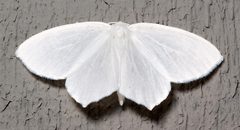
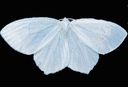
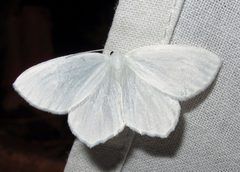
Eugonobapta nivosaria, commonly known as the Snowy , is a of geometrid found in eastern North America. The species was first described by Guenée in 1857 and is recognized by its distinctive white or pale coloration. It is a well-documented species with over 3,600 observations recorded on iNaturalist, indicating it is relatively common and conspicuous within its range. The moth occurs in deciduous and mixed forest where its larvae feed on various woody plants.
Pronunciation
How to pronounce Eugonobapta nivosaria: /juːɡoʊnoʊˈbæptə nɪˈvoʊsəriə/
These audio files are automatically generated. While they are not always 100% accurate, they are a good starting point.
Identification
The all-white or nearly white wings distinguish this from most other geometrid moths in its range. The small dark discal spot on the forewing, when present, is a useful diagnostic feature. Similar pale geometrids such as Lomographa vestaliata (White Spring Moth) have more pronounced dark markings or different wing shapes. Eugonobapta nivosaria flies later in the season than many other white geometrids. Genitalia examination may be required for definitive identification of worn or lightly marked specimens.
Images
Habitat
Deciduous and mixed forests, woodlands, and forest edges. Found in areas with abundant plants including birch, willow, and other woody shrubs. Occurs from low elevations to moderate mountainous regions. are attracted to light and may be found near forest clearings and suburban areas with tree cover.
Distribution
Eastern North America: from Manitoba and Ontario east to New Brunswick and Nova Scotia, south through the Great Lakes region and Appalachian Mountains to North Carolina and Tennessee. Absent from the far western and southwestern United States.
Seasonality
are active primarily from May through August, with peak activity in June and July in most of the range. Single-brooded in northern portions of range; possible partial second in southern Appalachians. Larvae present from late spring through summer.
Diet
Larvae feed on leaves of various deciduous woody plants, including Betula (birch), Salix (willow), and Alnus (alder). Specific records are limited but the is known to accept birch in captivity.
Host Associations
- Betula - larval primary
- Salix - larval willow
- Alnus - larval alder
Life Cycle
are laid singly or in small groups on plant leaves. Larvae feed externally on foliage, resting with the body extended straight from the substrate—a characteristic posture of ennomine geometrids. occurs in late summer or fall; the overwinters as a pupa. emerge the following spring to summer.
Behavior
are and readily attracted to artificial light sources. Larvae exhibit the characteristic 'looping' locomotion of geometrid caterpillars, with only two or three pairs of at the end. When disturbed, larvae may freeze in an extended posture resembling a twig. Adults are infrequently observed at flowers and do not appear to be strong fliers, typically remaining near forested areas.
Ecological Role
Larvae function as primary consumers, converting woody plant foliage into available to higher . They serve as prey for insectivorous birds, , and other . The contributes to nutrient cycling in deciduous forest through herbivory and subsequent deposition of .
Human Relevance
No significant economic impact; not a pest of ornamental or timber trees. Occasionally encountered by naturalists and enthusiasts at light traps. The conspicuous white coloration makes it a notable find for observers. No known cultural or traditional uses.
Similar Taxa
- Lomographa vestaliataSimilar white coloration but has more prominent dark markings on wings and flies earlier in spring (March–May).
- Cabera erythemariaPale geometrid with yellowish or pinkish tinge and more rounded wing margins; lacks the pure white ground color.
- Speranza pustulariaWhite geometrid with bold dark gray or brown transverse bands, readily distinguished by pattern.
More Details
Taxonomic history
Originally described as Acidalia nivosaria by Achille Guenée in 1857. Transferred to the Eugonobapta by subsequent authors. The genus Eugonobapta is small and primarily Nearctic in distribution.
Observation frequency
With over 3,600 iNaturalist observations, this is among the more frequently documented geometrid moths in eastern North America, likely due to its conspicuous white coloration and willingness to come to light.