
Caripeta aequaliaria
Grote, 1883
Western Conifer Looper, Red Girdle
Caripeta aequaliaria, commonly called the western conifer looper or red girdle, is a geometrid native to North America. The species was described by Augustus Radcliffe Grote in 1883. As a member of the Geometridae , it possesses the characteristic looping locomotion of its caterpillars. The 'western conifer looper' suggests an association with coniferous forests in western regions of the continent.
Pronunciation
How to pronounce Caripeta aequaliaria: //kæˈrɪpɪtə eˌkwɑːliˈɛəriə//
These audio files are automatically generated. While they are not always 100% accurate, they are a good starting point.
Identification
The combination of the 'red girdle' and western North American distribution in coniferous helps distinguish this from other Caripeta species. Accurate identification requires examination of genitalia or detailed wing pattern analysis.
Images
Appearance
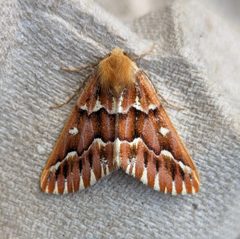
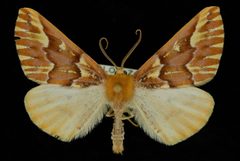
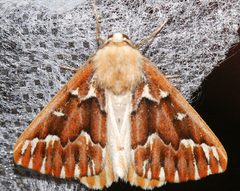
have wings with patterning that includes a reddish or pinkish band (the 'red girdle' of one ). Wings are relatively broad with typical geometrid moth proportions. Coloration and exact pattern details require specimen examination.
Habitat
Coniferous forests; associated with western North American montane and forest regions.
Distribution
North America, with emphasis on western regions including Pacific Northwest, Rocky Mountains, and adjacent forest zones.
Seasonality
period occurs during summer months; exact timing varies by latitude and elevation.
Behavior
Larvae exhibit the characteristic 'looping' locomotion typical of Geometridae, moving by arching the body to bring the hind forward to meet the thoracic legs.
Ecological Role
Larval stage functions as a folivore on coniferous trees; specific plant relationships require further documentation.
Human Relevance
The has been documented in forestry contexts due to its association with coniferous trees. It is not considered a major economic pest.
Similar Taxa
- Caripeta divisataAnother North American Caripeta with overlapping range; requires detailed examination to distinguish
- Other Ennominae geometridsSimilar wing patterns and body form; genitalia examination often necessary for definitive identification
More Details
Taxonomic History
First described by Grote in 1883; the specific epithet 'aequaliaria' refers to the relatively uniform or equal wing pattern elements. The MONA ( of North America) or Hodges number is 6865.