Macaria oweni
(Swett, 1907)
Owen's larch looper, Owen's angle moth, Owen's Angle
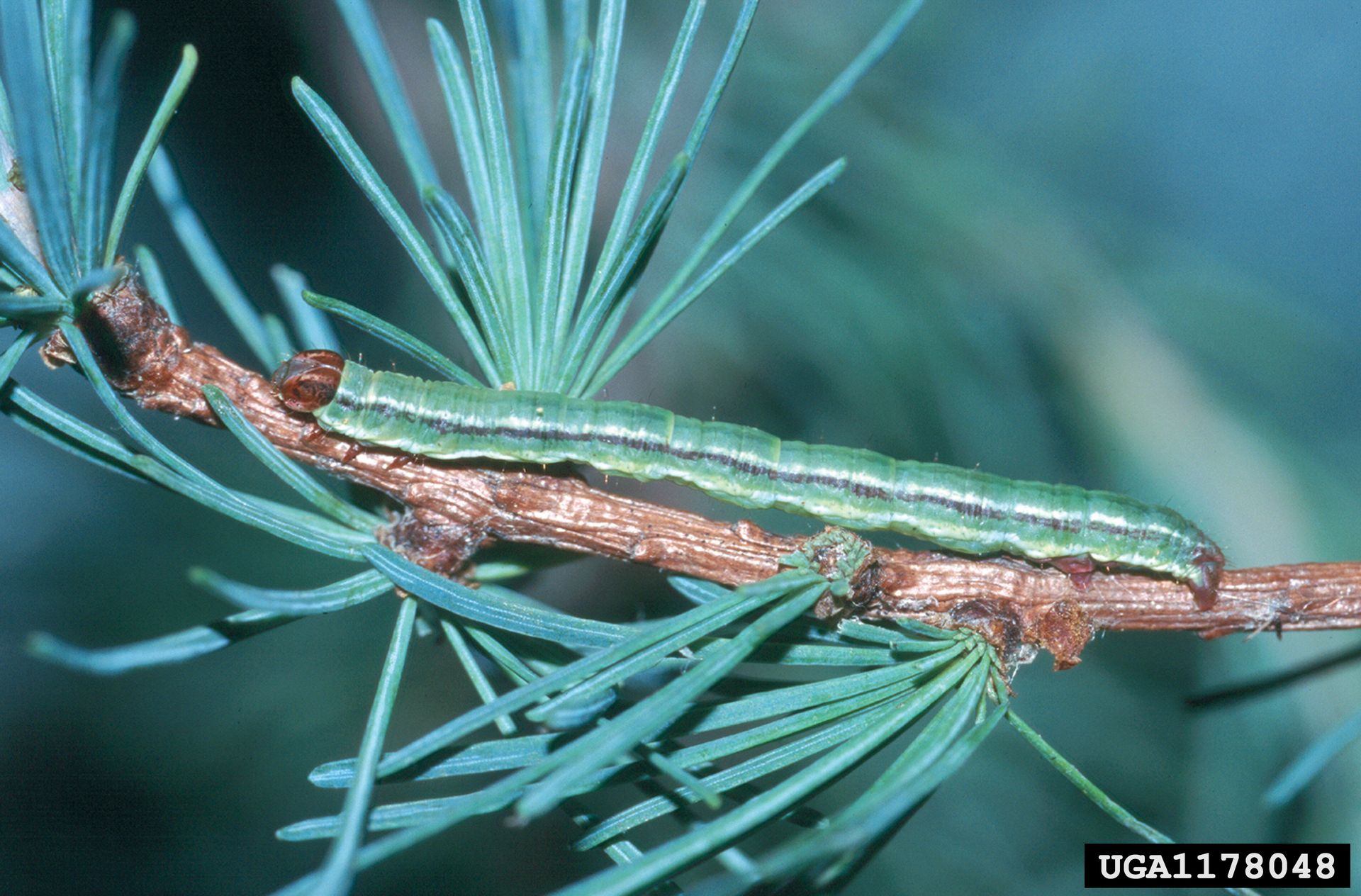
Macaria oweni is a small geometrid native to northern North America. The is specialized on tamarack (Larix laricina) as a larval . are active during early summer, with a single . The moth was first described from specimens collected in New England.
Pronunciation
How to pronounce Macaria oweni: /məˈkɛəriə ˈoʊwəni/
These audio files are automatically generated. While they are not always 100% accurate, they are a good starting point.
Identification
The is recognized by its small size (23 mm wingspan), early summer period (June to mid-July), and strong association with tamarack stands. Distinguishing features from such as Macaria adonis or Macaria signaria require examination of genitalia or wing pattern details not fully specified in general sources.
Images
Habitat
Associated with tamarack (Larix laricina) wetlands and forested peatlands. Distribution closely tracks the range of its tree in northern and hemiboreal zones.
Distribution
North America: Newfoundland west to west-central Alberta; south in the eastern portion of range to northern New England. Canadian provincial records include Alberta, Manitoba, and Saskatchewan. United States records include Vermont.
Seasonality
active from June to mid-July in Alberta. Single per year ().
Diet
Larvae feed exclusively on Larix laricina (tamarack/eastern larch). feeding habits are not documented.
Host Associations
- Larix laricina - larval sole documented plant
Life Cycle
One per year. stage not explicitly documented, but likely as pupa given typical geometrid . Larval development occurs on tamarack foliage.
Behavior
Larvae are folivorous on tamarack. is not documented in detail.
Ecological Role
herbivore on tamarack; contributes to nutrient cycling in wetland forest . may be influenced by tamarack availability and wetland hydrology.
Human Relevance
Not a significant economic pest. Of interest to forest entomologists and lepidopterists studying wetland-associated fauna. Documented in USDA Forest Service caterpillar surveys for northeastern conifers.
Similar Taxa
- Macaria adonisSimilar size and ; distinguished by wing pattern and genitalia
- Macaria signariaOverlapping range; requires detailed examination for separation
More Details
Nomenclature
Originally described as Sciagraphia oweni by Louis W. Swett in 1907. Has been treated under the Semiothisa in some literature.