
Heliomata cycladata
Grote & Robinson, 1866
common spring moth
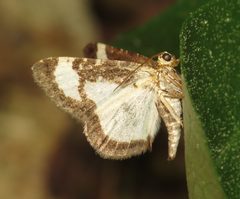
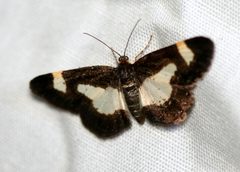
Heliomata cycladata is a small geometrid known as the common spring moth, first described in 1866. It occurs across eastern North America from southern Canada through the eastern United States. fly in spring and early summer, with larvae specializing on two leguminous tree .
Pronunciation
How to pronounce Heliomata cycladata: /hɛ.liˈoʊ.mə.tə saɪˈklæ.də.tə/
These audio files are automatically generated. While they are not always 100% accurate, they are a good starting point.
Identification
A small geometrid with wingspan approximately 20 mm. can be distinguished from other spring-flying geometrids by their early period (March–July) and eastern North American distribution. The specific wing pattern details are not documented in available sources.
Images
Distribution
Eastern North America: southern Ontario, southern Quebec, Maine, New Hampshire, Michigan, Wisconsin south to South Carolina, Georgia, Alabama, northern Mississippi, and Arkansas. Vermont records confirmed.
Seasonality
active from March to July, with peak activity in spring.
Diet
Larvae feed on Robinia pseudoacacia (black locust) and Gleditsia triacanthos (honey locust). diet not documented.
Host Associations
- Robinia pseudoacacia - larval black locust
- Gleditsia triacanthos - larval honey locust
Ecological Role
Larval herbivore on two native/naturalized leguminous trees; specific functions not documented.