
Digrammia ocellinata
(Guenée, 1857)
Faint-spotted Angle, Locust Looper
Digrammia ocellinata is a geometrid commonly known as the faint-spotted angle or locust looper. First described by Achille Guenée in 1857, it occurs across the eastern United States and southern Canada. The is notable for its larval association with leguminous trees, particularly black locust and honey locust.
Pronunciation
How to pronounce Digrammia ocellinata: /dɪˈɡræmiə oʊˌsɛlɪˈnɑːtə/
These audio files are automatically generated. While they are not always 100% accurate, they are a good starting point.
Identification
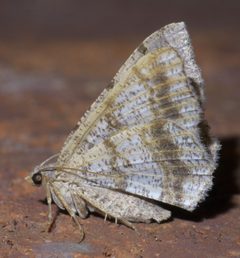
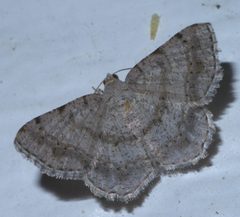
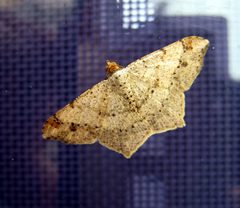
Distinguished from similar Digrammia by the faint-spotted wing pattern and smaller size relative to some . The specific epithet "ocellinata" refers to small -like spots (ocelli) on the wings. may be separated from D. muscariata and D. californiaria by geographic range and wing pattern details, though precise identification may require examination of genitalia.
Images
Appearance
have a wingspan of 21–27 mm. Wing pattern features faint spotting that gives the its . As a member of Geometridae, adults possess the slender body and broad, relatively flat wings at rest typical of the .
Habitat
Associated with deciduous forests and woodland edges where trees occur. Larval is the foliage of Robinia pseudoacacia and Gleditsia triacanthos.
Distribution
Eastern United States, Quebec, and Ontario. Records indicate presence in Vermont and broader North American distribution.
Seasonality
are active from April to October, with extended period suggesting multiple or continuous .
Diet
Larvae feed on leaves of Robinia pseudoacacia (black locust) and Gleditsia triacanthos (honey locust). feeding habits are not documented.
Host Associations
- Robinia pseudoacacia - larval food plantblack locust
- Gleditsia triacanthos - larval food planthoney locust
Life Cycle
Complete with , larva, pupa, and stages. Larvae are specialized feeders on leguminous tree foliage. Detailed of stages is not documented.
Behavior
are and attracted to ultraviolet light sources. Larvae are foliage feeders on trees.
Ecological Role
Larval herbivore on nitrogen-fixing leguminous trees. Role in as prey for birds, , and other is likely but not specifically documented.
Human Relevance
Minor potential as a defoliator of ornamental Robinia and Gleditsia plantings, though not considered a significant pest. The "locust looper" reflects larval feeding on locust trees.
Similar Taxa
- Digrammia muscariataSimilar size and wing pattern; distinguished by geographic distribution and subtle wing marking differences
- Digrammia californiariaLarger and more western in distribution; wing pattern differs in spot intensity and arrangement
More Details
Taxonomic history
Originally described as Macaria ocellinata by Guenée in 1857, later transferred to Digrammia. The basionym Macaria ocellinata is retained as a synonym.
Collection records
iNaturalist documents nearly 6,000 observations, indicating it is a frequently encountered and well-documented in its range.
Sources and further reading
- BugGuide
- Wikipedia
- GBIF taxonomy match
- iNaturalist taxon
- NCBI Taxonomy
- Catalogue of Life
- What Will You See at Bohart Museum Open House | Bug Squad
- Blacklighting at the Bohart: They Saw the Light | Bug Squad
- Oh, What a (Moth) Night! | Bug Squad
- Bohart Open House: Like a Moth to a Flame | Bug Squad
- Mark Your Calendar for 'Moth Night' at Bohart Museum: July 30 | Bug Squad
- A Night at the Bohart Museum: Moth Night on Saturday, July 22 | Bug Squad