
Spodolepis substriataria
Hulst, 1896
Spodolepis substriataria is a North American geometrid first described by George D. Hulst in 1896. The exhibits a broad transcontinental distribution spanning and temperate regions from Alaska across Canada to the Atlantic coast, with southern extensions into the western United States. It belongs to the diverse Ennominae, a group commonly known as inchworm or spanworm moths due to their characteristic larval locomotion.
Pronunciation
How to pronounce Spodolepis substriataria: //spɒd.oʊˈlɛ.pɪs ˌsʌb.stri.əˈtɛə.rɪə//
These audio files are automatically generated. While they are not always 100% accurate, they are a good starting point.
Identification
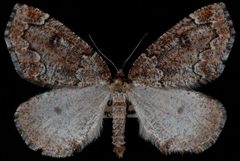
Distinguished from similar Spodolepis by the combination of fine substriate (finely lined) forewing patterning and the pale, relatively unmarked hindwings. S. substriataria shows more pronounced longitudinal striation than S. fulvibasis, which has warmer basal coloration. The species can be separated from other western Ennominae with forewings by its distribution and relatively small size. Genitalia examination may be required for definitive identification where ranges overlap with .
Images
Appearance
are medium-sized geometrid moths with wingspans approximately 25–30 mm. Forewings are pale grayish-brown with fine, darker striations that give the its name; transverse lines are typically faint but may be more distinct in some individuals. Hindwings are paler, nearly uniform in color, lacking strong patterning. The body is slender and covered in fine matching the wing coloration. are and relatively simple in structure.
Habitat
Occupies forest, taiga, and northern temperate woodland . Found in coniferous and mixed forests, particularly in association with spruce (Picea), fir (Abies), and pine (Pinus) stands. Also occurs in riparian corridors, forest edges, and open woodlands. Elevation range extends from lowlands to subalpine zones in western mountain ranges.
Distribution
Transcontinental across northern North America. Range extends from Alaska and Yukon eastward across all Canadian provinces to Newfoundland and Labrador. Southern limits reach northern California in the west, with disjunct or marginal records in the northeastern United States including Vermont and New Jersey.
Seasonality
are active primarily from late May through August, with peak activity in June and July. Timing varies with latitude and elevation; northern fly later in the season. Most records fall within this single- () period, though some southern populations may show partial second .
Life Cycle
details are poorly documented. Larvae are presumed to feed on coniferous foliage given associations, though specific plant records are lacking. likely occurs in soil or leaf litter. stage is inferred to be larval or pupal based on related Ennominae, but not confirmed.
Behavior
are and attracted to light. activity peaks during warm, humid evenings. Resting posture typical of Geometridae: wings held flat or slightly tented over the body. Larval unrecorded; expected to exhibit characteristic looping locomotion of geometrid caterpillars.
Ecological Role
serve as prey for including bats and night-foraging birds. Larval herbivory, if confirmed on conifers, would contribute to nutrient cycling in forest . likely influenced by forest disturbance regimes.
Human Relevance
No significant direct economic impact. Occasionally encountered by forest entomologists and biodiversity surveys. Not considered a forestry pest. Presence serves as an indicator of intact and northern temperate forest .
Similar Taxa
- Spodolepis fulvibasisOverlapping western range; distinguished by warmer orange-brown basal forewing coloration and less distinct striation.
- Spodolepis hypenoidesSimilar size and pattern; requires genitalia examination for separation in areas of sympatry.
- Lomographa semiclarataSympatric Ennominae with forewings; larger size and more contrasting wing pattern distinguish it.
More Details
Taxonomic History
Described by George D. Hulst in 1896 based on material from the northern United States or Canada. The specific epithet 'substriataria' refers to the finely lined (substriate) forewing pattern. The Spodolepis remains taxonomically stable within Ennominae, though boundaries have been clarified through recent morphological revisions.
Conservation Status
Not evaluated by IUCN. Widespread distribution and occurrence in extensive forest suggest secure status, though climate-driven range shifts may affect southern .