
Spodolepis danbyi
Hulst, 1898
Dog-face Geometer
Spodolepis danbyi, known as the Dog- Geometer, is a of geometrid in the Ennominae. It is a North American species first described by George D. Hulst in 1898. The refers to a distinctive facial marking pattern on the moth. The Spodolepis is small and poorly studied, with limited published information on its .
Pronunciation
How to pronounce Spodolepis danbyi: //ˌspoʊdəˈliːpɪs ˈdænbi.aɪ//
These audio files are automatically generated. While they are not always 100% accurate, they are a good starting point.
Identification
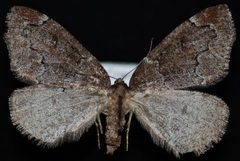
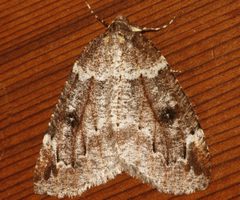
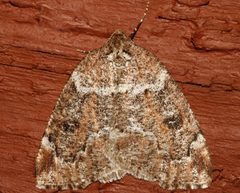
The 'dog-' pattern on the / is the most reliable field mark. Distinguished from similar small gray geometrids by the combination of this facial marking and the relatively plain, unmarked hindwings. Spodolepis subpunctata, the only other in the in North America, has more prominently spotted forewings and lacks the distinct facial pattern.
Images
Appearance
have forewings with a mottled gray-brown pattern and a characteristic dark marking on the and that resembles a dog's , giving rise to the . Wingspan ranges approximately 20-25 mm. The wings show typical ennomine geometrid patterning with wavy transverse lines and a somewhat rounded outer margin. are in both sexes.
Habitat
Deciduous and mixed woodlands, particularly areas with oak (Quercus) . Found in forest edges and open wooded .
Distribution
Eastern North America, from southern Ontario and Quebec south through the eastern United States to Florida and west to Texas and Oklahoma. Core range in the Appalachian region and Ozark Mountains.
Seasonality
are active from late April through August, with peak activity in May and June. Likely , though some southern may show partial second .
Behavior
are and attracted to light. Larval has not been documented.
Human Relevance
Occasionally encountered by enthusiasts at light traps; not an agricultural or forestry pest.
Similar Taxa
- Spodolepis subpunctataOnly other North American Spodolepis ; distinguished by spotted forewings and lack of dog- pattern
- Iridopsis defectariaSimilar small gray geometrid with rounded wings, but has more angular wing margins and lacks the distinctive facial marking
More Details
Taxonomic notes
The Spodolepis contains approximately 6-8 globally, with most diversity in North America. The etymology of the specific epithet 'danbyi' is uncertain but may honor an early collector. Larval plants remain undocumented despite the species' relative commonness in parts of its range.