
Campaeini
Genus Guides
1Campaeini is a tribe of geometer moths within the Geometridae, Ennominae. The tribe includes such as Campaea and Peribatodes, characterized by relatively broad-winged with cryptic coloration. Members are primarily and are found across temperate regions of the Northern Hemisphere. The tribe is distinguished by specific genitalic and wing venation characteristics that separate it from related ennomine tribes.
Pronunciation
How to pronounce Campaeini: /kæmˈpiː.ɪˌniː/
These audio files are automatically generated. While they are not always 100% accurate, they are a good starting point.
Identification
Campaeini can be distinguished from other Ennominae tribes by a combination of wing venation features (including the arrangement of forewing and the presence of a well-developed areole) and male genitalic structures, particularly the shape of the valvae and . Externally, they often resemble members of the tribe Boarmiini but tend to have broader wings with less angular margins. Accurate identification to tribe level requires dissection and examination of genitalia or reference to detailed morphological keys.
Images
Appearance
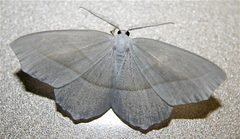
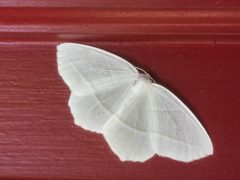
Campaeini typically have broad, somewhat rounded forewings and hindwings that are held flat or slightly overlapping at rest. Wing patterns often consist of wavy transverse lines and variable shading in shades of brown, gray, or whitish tones, providing bark- or lichen-mimicking camouflage. Body size ranges from small to medium for geometrids, with relatively robust . are in both sexes. Many show in wing coloration, with females often paler or more heavily marked than males.
Habitat
Members of Campaeini occupy a range of wooded and shrubland , including deciduous and mixed forests, hedgerows, and parklands. They are associated with areas supporting their larval plants, which are primarily woody shrubs and trees. Habitat specificity varies by , with some restricted to particular forest types while others are more .
Distribution
The tribe has a primarily Holarctic distribution, with occurring across North America, Europe, and temperate Asia. Some extend into the Oriental region. Distribution patterns within the tribe reflect the ranges of constituent genera, with Campaea centered in the Palearctic and Peribatodes showing broader trans-Palearctic occurrence.
Seasonality
periods vary by and latitude, generally occurring from late spring through autumn in temperate regions. Many species are single-brooded (), with adults active in mid-summer, while others may have partial second in favorable climates. typically occurs as or larvae, depending on the species.
Diet
Larvae feed on the foliage of woody angiosperms, with recorded including of Rosaceae, Salicaceae, Betulaceae, and other deciduous trees and shrubs. Specific host associations vary among and species. do not feed.
Host Associations
- Rosaceae - larval foodplantIncludes such as Prunus, Crataegus, and Malus
- Salicaceae - larval foodplantIncludes Salix and Populus
- Betulaceae - larval foodplantIncludes Betula and Alnus
Life Cycle
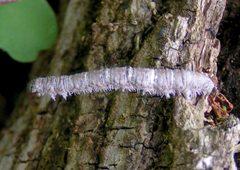
are laid on plant foliage or bark. Larvae are elongate, loop-feeding caterpillars typical of Geometridae, with reduced . They feed externally on leaves, often resting along twigs or leaf edges. occurs in a loose cocoon in leaf litter or soil. The is completed in one year for most , with some exhibiting extended larval development in colder climates.
Behavior
are and attracted to light. They are generally inactive during daylight hours, resting on tree trunks or foliage where their cryptic coloration provides concealment. Larvae exhibit characteristic looping locomotion and may thrash or drop from foliage when disturbed.
Ecological Role
Larvae function as folivores in forest and shrubland , contributing to nutrient cycling through herbivory on deciduous woody plants. They serve as prey for various including birds, , and predatory insects. may contribute to pollination in some contexts, though this is not a primary ecological role.
Human Relevance
Some occasionally reach densities and cause minor defoliation of ornamental or fruit trees, though they are not considered significant forestry or agricultural pests. The tribe includes species of interest to lepidopterists and is documented in regional faunal surveys.
Similar Taxa
- BoarmiiniOverlapping external and use; distinguished by wing venation and genitalic features, with Boarmiini typically having more angular wing margins and different male genitalic structure.
- BistoniniSimilar cryptic brown-gray coloration and bark-resting habits; separated by differences in forewing venation and the structure of the tympanal organs.
More Details
Taxonomic history
The tribal classification of Ennominae has undergone revision, and the composition of Campaeini has been refined based on phylogenetic studies. Some formerly placed here have been moved to other tribes, and the current circumscription reflects molecular and morphological evidence.