
Protoboarmia porcelaria
(Guenée, 1857)
Porcelain Gray, Dash-lined Looper
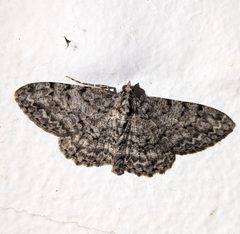
Protoboarmia porcelaria is a Geometrid commonly known as the Porcelain Gray or Dash-lined Looper. are medium-sized with brown-gray wings marked by crossed curved lines and a distinctive black blotch. The occurs throughout North America except the far north, with one annually in northern regions and two in southern areas. Larvae feed primarily on conifer foliage and overwinter in their instar stage.
Pronunciation
How to pronounce Protoboarmia porcelaria: //ˌproʊtəˈboʊarmiə ˌpɔrsəˈlɛːriə//
These audio files are automatically generated. While they are not always 100% accurate, they are a good starting point.
Identification
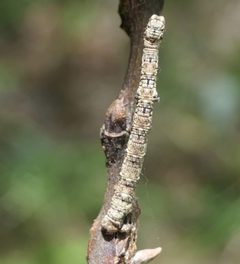
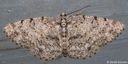
distinguished by combination of brown-gray ground color, crossed curved lines with tooth-like dentations, black postmedian blotch, and centered hindwing discal mark. Caterpillars identified by Y-pattern on segments and herringbone pattern.
Images
Habitat
Coniferous forests and woodlands. Associated with tree including balsam fir, red spruce, tamarack, and white spruce.
Distribution
North America, excluding far northern regions. Documented in Canada (Alberta, Manitoba, Saskatchewan) and United States (Vermont and broadly across the continent).
Seasonality
active May through September. One per year in northern range; two generations in southern range. Larvae overwinter in instar, resume feeding early spring, and pupate in June.
Diet
Larvae phyllophagous, feeding on foliage of conifers. Primary : balsam fir (Abies balsamea), red spruce (Picea rubens), tamarack (Larix laricina), white spruce (Picea glauca).
Host Associations
- Abies balsamea - larval food plantbalsam fir
- Picea rubens - larval food plantred spruce
- Larix laricina - larval food planttamarack
- Picea glauca - larval food plantwhite spruce
Life Cycle
Female lays approximately 150 on foliage in July. Larvae hatch and feed, then overwinter in instar. Development resumes early spring; occurs in June. emerge May–September. Voltinism varies geographically: in north, in south.
Behavior
Larvae are foliage feeders on conifers. occurs in larval stage. , attracted to light.
Ecological Role
Larval herbivore on coniferous trees. Functions as primary consumer in forest . Serves as prey for .
Human Relevance
Minor forest pest potential on spruce and fir . Occasionally encountered by foresters and naturalists. readily attracted to light traps.
Similar Taxa
- Other Protoboarmia speciesSimilar wing pattern and body form; requires examination of genitalia or precise line dentation patterns for definitive identification
- Other Ennominae loopersShared brown-gray coloration and looping larval locomotion; distinguished by specific line patterns and caterpillar markings
More Details
Original Description
First described by Achille Guenée in 1857 as Boarmia porcelaria.
Etymology
Specific epithet 'porcelaria' likely refers to the porcelain-like gray coloration of wings.