
Lycia ypsilon
(Forbes, 1885)
Woolly Gray Moth, woolly gray
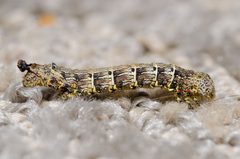
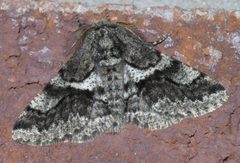
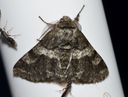
Lycia ypsilon, commonly known as the woolly gray , is a of geometrid moth in the Geometridae. It is found in North America. The species has two recognized : L. y. ypsilon and L. y. carlotta. It is assigned MONA/Hodges number 6652, a standard identifier used in North American moth classification.
Pronunciation
How to pronounce Lycia ypsilon: /ˈlaɪ.si.ə ˈɪp.sɪ.lɒn/
These audio files are automatically generated. While they are not always 100% accurate, they are a good starting point.
Identification
The name 'ypsilon' refers to the Greek letter Y (upsilon), likely alluding to a distinctive wing pattern or marking. As a member of the Lycia, it belongs to a group of commonly referred to as 'woolly' species, suggesting a densely hairy or furry body covering. The two (L. y. ypsilon and L. y. carlotta, described by Hulst in 1896) indicate geographic or morphological variation across its range.
Images
Distribution
North America. Specific range details beyond continental presence are not documented in available sources.
Human Relevance
The is of interest to lepidopterists and naturalists. Its MONA/Hodges number (6652) facilitates standardized recording in North American surveys and citizen science platforms such as iNaturalist, where it has accumulated over 3,400 observations.
Similar Taxa
- Other Lycia speciesThe Lycia contains multiple 'woolly' with similar and presumably comparable ; precise differentiation requires examination of genitalia or wing pattern details not specified in available sources.