
Euchlaena tigrinaria
(Guenée, 1857)
Mottled Euchlaena, Mottled Euchlaena Moth
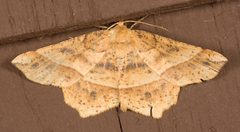
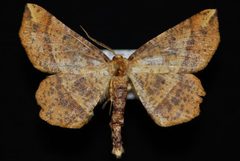
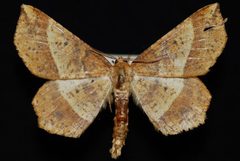
Euchlaena tigrinaria, the Mottled Euchlaena, is a geometrid distributed across much of North America. are medium-sized with wingspans of 33–41 mm and fly from spring through summer, with timing varying by latitude. The has one per year. Larvae feed on a diverse range of woody plants including poplar, birch, dogwood, oak, willow, and conifers.
Pronunciation
How to pronounce Euchlaena tigrinaria: //juːˈkleɪnə tɪˌɡrɪˈnɛəriə//
These audio files are automatically generated. While they are not always 100% accurate, they are a good starting point.
Identification
Similar to other Euchlaena , particularly Euchlaena amoenaria and Euchlaena irraria. Distinguished by mottled gray-brown forewing pattern with darker transverse lines and a relatively uniform, non-contrasting appearance. Hindwing typically paler than forewing. Accurate identification often requires examination of genitalia or comparison with regional reference collections.
Images
Habitat
Occurs in deciduous and mixed forests, woodlands, and riparian areas. Found in supporting its larval plants, including aspen-birch forests, oak woodlands, and willow-dominated riparian corridors. Elevation range extends from lowlands to montane zones.
Distribution
North America: New Brunswick to Virginia, west to Texas, Utah, and Oregon, north to British Columbia. Present in Canadian provinces of Alberta, Manitoba, and Saskatchewan; U.S. states include Vermont and presumably others across the documented range.
Seasonality
active April–August in southern portions of range; May or June to July in northern portions. Single per year ().
Diet
Larvae feed on leaves of Populus tremuloides (quaking aspen), Betula papyrifera (paper birch), Shepherdia canadensis (Canada buffaloberry), Cornus sericea (red-osier dogwood), Corylus cornuta (beaked hazel), Quercus (oak), Holodiscus discolor (oceanspray), Pinus contorta (lodgepole pine), Amelanchier alnifolia (Saskatoon serviceberry), and Salix (willow) . feeding habits unknown.
Host Associations
- Populus tremuloides - larval quaking aspen
- Betula papyrifera - larval paper birch
- Shepherdia canadensis - larval Canada buffaloberry
- Cornus sericea - larval red-osier dogwood
- Corylus cornuta - larval beaked hazel
- Quercus - larval oak
- Holodiscus discolor - larval oceanspray
- Pinus contorta - larval lodgepole pine
- Amelanchier alnifolia - larval Saskatoon serviceberry
- Salix - larval willow
Life Cycle
(one per year). stage not explicitly documented in sources but presumed to be pupal or larval based on typical geometrid . emerge in spring to midsummer depending on latitude.
Behavior
; attracted to artificial light sources. Larvae are external foliage feeders on woody plants.
Ecological Role
Larval herbivore on diverse woody plant ; contributes to nutrient cycling and serves as prey for . Broad plant range suggests herbivore role in forest .
Human Relevance
No significant economic or medical importance documented. Occasionally encountered by naturalists and enthusiasts at light traps. Not considered a pest .
Similar Taxa
- Euchlaena amoenariaSimilar size and general appearance; distinguished by forewing pattern details and genitalia
- Euchlaena irrariaOverlapping distribution and comparable ; requires careful examination for separation
- Euchlaena obtusariaAnother member of with potentially similar mottled gray-brown coloration
More Details
Taxonomic Note
Authorship sometimes cited as (Guenée, [1858]) in some sources; original description 1857.
Collection Records
Documented from blacklight surveys in Colorado foothills and mixed conifer forest , indicating attraction to ultraviolet light sources.