
Euchlaena amoenaria
(Guenée, [1858])
Deep Yellow Euchlaena Moth
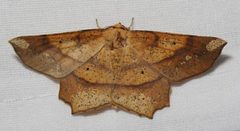
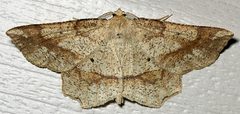
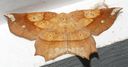
Euchlaena amoenaria, commonly known as the Deep Yellow Euchlaena , is a geometrid moth native to eastern North America. are medium-sized with a wingspan of 30–50 mm and exhibit activity from May through September. The species is attracted to artificial light sources and has been documented in deciduous forest . Larval plants remain unknown, though related Euchlaena species feed on deciduous tree foliage.
Pronunciation
How to pronounce Euchlaena amoenaria: //juːˈkleɪ.nə ˌæm.oʊˈnɛr.i.ə//
These audio files are automatically generated. While they are not always 100% accurate, they are a good starting point.
Identification
Distinguished from other Euchlaena by geographic range (eastern North America) and period (May–September). Specific diagnostic features separating it from such as Euchlaena irraria or Euchlaena serrata are not documented in available sources. The 'Deep Yellow Euchlaena' suggests more intense yellow coloration than related species, but this requires verification.
Images
Appearance
Medium-sized geometrid with wingspan of 30–50 mm. display yellow coloration as suggested by . and wing pattern details are not documented in available sources. Larval unknown.
Habitat
Deciduous forest environments. Attracted to artificial lighting in forested settings. Has been documented at blacklight stations in mixed conifer-deciduous forest transitions and lower elevation scrub-oak .
Distribution
Eastern North America. Documented from Colorado (Blodgett Peak Open Space), Illinois (Giant City State Park), Kentucky (Eddyville), and inferred throughout eastern deciduous forest regions based on GBIF and iNaturalist records.
Seasonality
active from May to September. Two per year (). Peak activity period not specified in sources.
Life Cycle
Two annually. Complete larval and pupal details unknown. plant for larvae undocumented.
Behavior
. Strongly attracted to artificial light sources including porch lights and blacklights. have been observed at light stations in forested areas.
Ecological Role
likely serve as prey for including bats and night-flying birds. Potential role as herbivore in larval stage unknown due to undocumented associations.
Human Relevance
Subject of citizen science documentation through National Week events and iNaturalist observations. Featured in public moth education presentations. No economic or agricultural significance documented.
Similar Taxa
- Euchlaena irrariaOverlapping and similar size; distinguished by different color pattern and potentially different geographic distribution
- Euchlaena serrata with similar ; specific differences not documented in available sources
More Details
Taxonomic authority variation
Sources differ on authorship date: Catalogue of Life lists [1858], NCBI lists 1857, and some sources attribute to Guenée without year. The accepted authority is Guenée with year circa 1857–1858.
Data gaps
Larval plant, , site, and stage are undocumented in scientific literature. The 4,266 iNaturalist observations suggest adequate photographic documentation exists but detailed studies are lacking.