
Inga cretacea
(Zeller, 1873)
Chalky Inga Moth
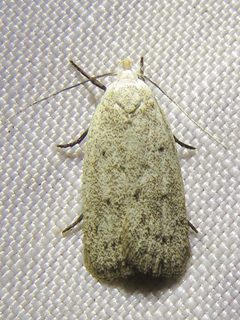
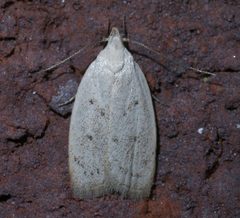
Inga cretacea, commonly known as the Chalky Inga , is a of concealer moth in the Oecophoridae. It was described by Zeller in 1873. The species belongs to the large and diverse superfamily Gelechioidea, which contains many small moth species often associated with plant material and detritus. The specific epithet "cretacea" refers to a chalky or chalk-like appearance, likely describing the coloration of the moth.
Pronunciation
How to pronounce Inga cretacea: /ˈiŋ.ɡə krɛˈtæ.si.ə/
These audio files are automatically generated. While they are not always 100% accurate, they are a good starting point.
Identification
The can be distinguished from other Inga species by its chalky coloration, though specific diagnostic features for this species versus are not well documented in available literature. Identification to species level likely requires examination of genitalia or detailed wing pattern analysis by a .
Images
Appearance
The specific epithet "cretacea" (Latin for chalky or chalk-like) suggests the has pale, whitish, or grayish coloration reminiscent of chalk. As a member of Oecophoridae, it likely has the typical concealer moth body plan: relatively broad wings held tent-like over the body at rest, and a moderately robust body form. The wingspan and detailed patterning are not documented in available sources.
Distribution
The has been documented in North America based on iNaturalist observations, though specific range details are limited in available sources. The Inga is primarily Neotropical, and the species may occur in tropical or subtropical regions.
More Details
Taxonomic note
The name Inga is shared with a genus of flowering plants (Fabaceae) native to the American tropics. The genus Inga in Oecophoridae is unrelated to the plant genus. This homonymy can cause confusion in ecological literature where both the moth and its potential plants may be discussed.
Observation data
iNaturalist records 1802 observations of this , indicating it is relatively well-documented by citizen scientists, though detailed biological information remains sparse in the scientific literature.