
Mompha terminella
(Humphreys & Westwood, 1845)
Enchanter's Cosmet
Mompha terminella is a small microlepidopteran in the Momphidae, commonly known as Enchanter's Cosmet. It has a trans-Palearctic distribution across Europe and is also present in North America. The is specialized on enchanter's nightshade (Circaea spp.), with larvae mining leaves of their plants. are rarely encountered in the field, with most records coming from larval leaf mines.
Pronunciation
How to pronounce Mompha terminella: //ˈmɒmfə ˌtɜːrmɪˈnɛlə//
These audio files are automatically generated. While they are not always 100% accurate, they are a good starting point.
Identification
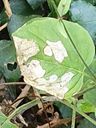
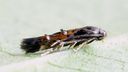
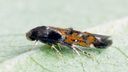
The combination of small size (8–10 mm wingspan), orange forewings with complex silver-metallic and black patterning, and dark leaden-metallic is distinctive within Momphidae. The black costal blotch with silver margins and the black wing apex preceded by white costal spot separate it from other orange Mompha . Larval mines in Circaea leaves—irregular blotches, initially spiral—are diagnostic when is confirmed.
Images
Habitat
Associated with moist woodland and shaded supporting of enchanter's nightshade (Circaea lutetiana) and small enchanter's nightshade (Circaea alpina). Larvae occur within leaf mines on these plants.
Distribution
Trans-Palearctic: from Fennoscandia south to the Iberian Peninsula, and from Ireland east to Romania. Also present in North America. Records include Belgium (Antwerpen province, Brussels-Capital Region, Flemish Region, Walloon Region).
Seasonality
active July to August in one annually. Larvae present mid-August to mid-September.
Diet
Larvae feed on leaves of Circaea lutetiana (enchanter's nightshade) and Circaea alpina (small enchanter's nightshade), creating blotch mines.
Host Associations
- Circaea lutetiana - larval Primary ; larvae mine irregular blotches in leaves
- Circaea alpina - larval Secondary
Life Cycle
: one per year. emerge July–August. laid on leaves. Larvae mine leaves mid-August to mid-September, initially creating spiral mines that expand to irregular blotches. presumably in leaf litter or soil; details of pupal stage not well documented.
Behavior
are seldom observed at large, suggesting or activity with limited range. Larvae are endophagous leaf miners, remaining concealed within leaf tissue.
Ecological Role
herbivore on Circaea ; contributes to leaf litter production through mined leaf tissue. and records are not documented.
Human Relevance
No economic or agricultural significance. Occasionally noted by naturalists and leaf-miner . 'Enchanter's Cosmet' refers to association with enchanter's nightshade.
Similar Taxa
- Other Mompha speciesSeveral Mompha have orange forewings, but M. terminella is distinguished by the specific pattern of silver-metallic stigmata, black costal blotch with silver margins, and black apex with preceding white costal spot. Genitalia examination may be required for definitive identification of some similar species.
More Details
Taxonomic history
Originally described as Glyphipteryx terminella by Humphreys & Westwood in 1845; later transferred to Mompha.
Observation bias
The is likely under-recorded due to rarity in field conditions; most documented occurrences derive from larval leaf mine detection rather than adult collection.