
Thiotrichinae
Genus Guides
3Thiotrichinae is a of small within the Gelechiidae (Lepidoptera). The subfamily comprises approximately 180 described distributed across five : Calliprora, Macrenches, Palumbina, Polyhymno, and Thiotricha. Thiotricha is the largest and most morphologically diverse genus, with the majority of species concentrated in the Old World tropics and subtropics. Recent phylogenetic studies have substantially revised the generic classification, synonymizing several genera with Thiotricha and establishing two new genera (Pulchrala, Tenupalpa) to accommodate distinct clades.
Pronunciation
How to pronounce Thiotrichinae: /ˌθaɪoʊˈtrɪkəˌniː/
These audio files are automatically generated. While they are not always 100% accurate, they are a good starting point.
Identification
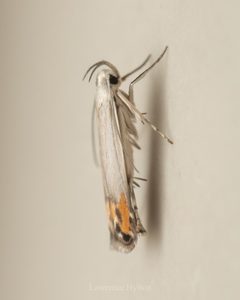
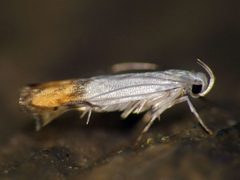
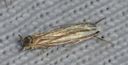
of Thiotrichinae are small to medium-sized gelechiid moths with narrow, forewings. Members of the Palumbina possess long-bristled hind tibiae, a diagnostic trait for that genus. The resting posture of adults resembles that of Stathmopodidae, with wings held tightly against the body. Accurate identification to level requires examination of genitalia; male genitalia is particularly important for distinguishing species groups within Thiotricha. The can be distinguished from other Gelechiidae by a combination of molecular markers and morphological characters, though field identification to subfamily is challenging without dissection.
Images
Habitat
Forest and woodland environments, particularly in association with broadleaf trees. Larval include leaf surfaces and petioles of plants. In Japan, have been recorded from subtropical islands to temperate mainland forests, suggesting broad habitat across the .
Distribution
Primarily distributed in the Old World, with highest diversity in the Oriental region including India, China, Southeast Asia (Cambodia, Vietnam), Korea, and Japan. The Thiotricha has been extensively documented from China, where 110 are now recognized. Palumbina species occur across the Oriental region and extend into the Palaearctic in Japan. The reaches Europe with at least one species described from south-eastern Europe.
Host Associations
- Castanopsis sieboldii - larval Fagaceae; leaf and petiole mining
- Castanopsis cuspidata - larval Fagaceae
- Toxicodendron succedaneum - larval Anacardiaceae
- Distylium racemosum - larval Hamamelidaceae
- Quercus myrsinaefolia - larval Fagaceae; reported for P. pylartis
- Pistacia sp. - larval Anacardiaceae; reported for P. guerinii
- Mangifera indica - larval Anacardiaceae; reported for P. glaucitis
Life Cycle
Complete with , larva, pupa, and stages. Larvae pass through early instars (pale yellow) to late instars (yellowish brown), reaching 3.5–3.6 mm in length. occurs within a cocoon inside a dried leaf case constructed by the larva. Adults emerge leaving the pupal protruding from the leaf case. Ovoviviparity has been reported for females of at least eight Palumbina , though this trait requires further confirmation across the .
Behavior
Larvae are leaf miners and petiole miners that construct portable leaf cases or shelters by cutting leaf tips and mining into petioles. This case-building provides protection during feeding and . rest with wings held tightly against the body in a posture resembling Stathmopodidae.
Ecological Role
Leaf-mining herbivores that feed on Fagaceae and Anacardiaceae plants. Some may function as pests on economically important hosts including mango (Mangifera indica) and pistachio (Pistacia). The contributes to leaf litter production through their feeding damage and case construction.
Human Relevance
Some Palumbina are associated with economically important plants including mango and pistachio, suggesting potential pest status, though direct economic impact has not been quantified. The has been subject to intensive taxonomic study due to its high and complex generic classification.
Similar Taxa
- Stathmopodidae resting posture is similar, with wings held tightly against the body; distinguished by wing venation and genitalia
- Other Gelechiidae subfamiliesThiotrichinae is distinguished by molecular markers and morphological characters including larval chaetotaxy and pupal ; precise identification requires phylogenetic analysis or detailed morphological examination
Sources and further reading
- BugGuide
- Wikipedia
- iNaturalist taxon
- NCBI Taxonomy
- Catalogue of Life
- Taxonomic study of Palumbina Rondani (Lepidoptera, Gelechiidae, Thiotrichinae) in Japan: biology, immature stages, and a new species
- A taxonomic review of Thiotricha Meyrick, 1886 (Lepidoptera, Gelechiidae, Thiotrichinae) from China, with descriptions of 84 new species
- A phylogeny of the subfamily Thiotrichinae ( Lepidoptera : Gelechiidae ) with a revision of the generic classification based on molecular and morphological analyses
- Figure 22 from: Kyaw KMM, Yagi S, Oku J, Hirowatari T (2023) Taxonomic study of Palumbina Rondani (Lepidoptera, Gelechiidae, Thiotrichinae) in Japan: biology, immature stages, and a new species. ZooKeys 1165: 61-99. https://doi.org/10.3897/zookeys.1165.101983
- Figure 15 from: Kyaw KMM, Yagi S, Oku J, Hirowatari T (2023) Taxonomic study of Palumbina Rondani (Lepidoptera, Gelechiidae, Thiotrichinae) in Japan: biology, immature stages, and a new species. ZooKeys 1165: 61-99. https://doi.org/10.3897/zookeys.1165.101983
- Figure 23 from: Kyaw KMM, Yagi S, Oku J, Hirowatari T (2023) Taxonomic study of Palumbina Rondani (Lepidoptera, Gelechiidae, Thiotrichinae) in Japan: biology, immature stages, and a new species. ZooKeys 1165: 61-99. https://doi.org/10.3897/zookeys.1165.101983
- Figure 21 from: Kyaw KMM, Yagi S, Oku J, Hirowatari T (2023) Taxonomic study of Palumbina Rondani (Lepidoptera, Gelechiidae, Thiotrichinae) in Japan: biology, immature stages, and a new species. ZooKeys 1165: 61-99. https://doi.org/10.3897/zookeys.1165.101983
- Figure 2 from: Kyaw KMM, Yagi S, Oku J, Hirowatari T (2023) Taxonomic study of Palumbina Rondani (Lepidoptera, Gelechiidae, Thiotrichinae) in Japan: biology, immature stages, and a new species. ZooKeys 1165: 61-99. https://doi.org/10.3897/zookeys.1165.101983
- Figure 9 from: Kyaw KMM, Yagi S, Oku J, Hirowatari T (2023) Taxonomic study of Palumbina Rondani (Lepidoptera, Gelechiidae, Thiotrichinae) in Japan: biology, immature stages, and a new species. ZooKeys 1165: 61-99. https://doi.org/10.3897/zookeys.1165.101983
- Figure 11 from: Kyaw KMM, Yagi S, Oku J, Hirowatari T (2023) Taxonomic study of Palumbina Rondani (Lepidoptera, Gelechiidae, Thiotrichinae) in Japan: biology, immature stages, and a new species. ZooKeys 1165: 61-99. https://doi.org/10.3897/zookeys.1165.101983
- Figure 19 from: Kyaw KMM, Yagi S, Oku J, Hirowatari T (2023) Taxonomic study of Palumbina Rondani (Lepidoptera, Gelechiidae, Thiotrichinae) in Japan: biology, immature stages, and a new species. ZooKeys 1165: 61-99. https://doi.org/10.3897/zookeys.1165.101983
- Figure 3 from: Kyaw KMM, Yagi S, Oku J, Hirowatari T (2023) Taxonomic study of Palumbina Rondani (Lepidoptera, Gelechiidae, Thiotrichinae) in Japan: biology, immature stages, and a new species. ZooKeys 1165: 61-99. https://doi.org/10.3897/zookeys.1165.101983
- Figure 17 from: Kyaw KMM, Yagi S, Oku J, Hirowatari T (2023) Taxonomic study of Palumbina Rondani (Lepidoptera, Gelechiidae, Thiotrichinae) in Japan: biology, immature stages, and a new species. ZooKeys 1165: 61-99. https://doi.org/10.3897/zookeys.1165.101983
- Figure 1 from: Kyaw KMM, Yagi S, Oku J, Hirowatari T (2023) Taxonomic study of Palumbina Rondani (Lepidoptera, Gelechiidae, Thiotrichinae) in Japan: biology, immature stages, and a new species. ZooKeys 1165: 61-99. https://doi.org/10.3897/zookeys.1165.101983
- Figure 16 from: Kyaw KMM, Yagi S, Oku J, Hirowatari T (2023) Taxonomic study of Palumbina Rondani (Lepidoptera, Gelechiidae, Thiotrichinae) in Japan: biology, immature stages, and a new species. ZooKeys 1165: 61-99. https://doi.org/10.3897/zookeys.1165.101983
- Thiotrichasumpichi sp. nov. - a new species of Thiotrichinae (Lepidoptera, Gelechiidae) from south-eastern Europe.