
Coleotechnites laricis
(Freeman, 1965)
orange larch tubemaker
Coleotechnites laricis, the orange larch tubemaker, is a small gelechiid with a wingspan of 10.5–13 mm. It is found in eastern Canada and the north-eastern United States, where its larvae are specialized feeders on eastern larch. The has one per year.
Pronunciation
How to pronounce Coleotechnites laricis: //ˌkoʊ.li.oʊˈtɛk.niˌtiːz ˈlæ.rɪ.sɪs//
These audio files are automatically generated. While they are not always 100% accurate, they are a good starting point.
Identification
Distinguished from similar Coleotechnites by the combination of shining black forewings with fawn and light grey hindwings. The small size (10.5–13 mm wingspan) and geographic association with eastern larch provide additional diagnostic context. Specific identification may require genitalia examination or larval confirmation.
Images
Habitat
Associated with eastern larch (Larix laricina) stands. Specific microhabitat preferences for are not documented.
Distribution
Eastern Canada and north-eastern United States. Distribution records from GBIF confirm presence in Canada (CA) and United States (US).
Seasonality
One per year. Specific period not documented in available sources.
Diet
Larvae feed on eastern larch (Larix laricina). feeding habits are not documented.
Host Associations
- Larix laricina - larval eastern larch
Life Cycle
One per year (). Larval development occurs on eastern larch. Specific details of , stage, and timing are not documented.
Behavior
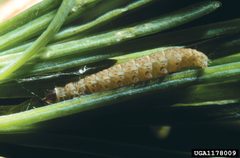
Larvae construct tubes or shelters from larch needles, consistent with the "tubemaker." is not documented.
Ecological Role
Herbivore on eastern larch. Specific role in or processes is not documented.
Human Relevance
No documented economic or cultural significance. Not known to be a pest of ornamental or commercial larch plantings.
Similar Taxa
- Other Coleotechnites speciesMany are larch or conifer with similar size and wing patterns. C. laricis is distinguished by forewing coloration (shining black with fawn ) and geographic range, though precise identification often requires examination of genitalia or larval confirmation.
More Details
Taxonomic history
Described by Freeman in 1965. The epithet "laricis" refers to its association with Larix (larch) .