
Carpatolechia fugitivella
(Zeller, 1839)
elm groundling
Carpatolechia fugitivella, commonly known as the elm groundling, is a small gelechiid with a wingspan of 11–15 mm. The is widespread across Europe, extending into Asia and North America. are active from June to September and are attracted to light.
Pronunciation
How to pronounce Carpatolechia fugitivella: /kaɹˌpætəˈliːkiə fjuːˌdʒɪtɪˈvɛlə/
These audio files are automatically generated. While they are not always 100% accurate, they are a good starting point.
Identification
Distinguished from similar gelechiid moths by the combination of: terminal palp segment longer than second; forewing pattern with costal spots, fold streak (often broken), paired discal dots at 2/3, and pale angulated fascia at 3/4; presence of raised patches on forewings that may be whitish or black. The specific association with elm (Ulmus) as a primary , combined with the characteristic wing pattern, aids identification.
Images
Appearance
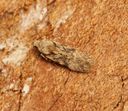
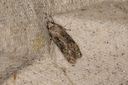
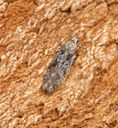
Small with wingspan 11–15 mm. whitish, grey sprinkled. Terminal joint of labial palpi longer than second segment. Forewings grey, irrorated with blackish, with suffused blackish spots on near base and before and beyond middle; blackish streak along fold, sometimes interrupted into two or three spots; two black dots transversely placed in disc at 2/3; pale angulated fascia at 3/4 sometimes indicated by darker suffusion. Hindwings grey. Forewing length 6–7.5 mm with greyish-brown coloration and black speckling; up to three patches of raised present, which can appear whitish or black. Larva light green, above reddish-tinged with black dots; head and plate of segment 2 light brown.
Habitat
Woodland, parks, gardens, and hedgerows— where trees occur.
Distribution
Almost all of Europe (except Portugal, Croatia, Bulgaria); Turkey; Caucasus; Mongolia; southern Siberia; Russian Far East; Korea. North America: Canada (Ontario, Quebec). In the British Isles, local in England and Wales, less common in Scotland and Ireland.
Seasonality
fly from June to September. laid on plants are thought to overwinter, with larvae hatching the following spring.
Host Associations
- Ulmus - primary including Ulmus glabra (wych elm)
- Quercus -
- Corylus -
- Prunus avium -
- Pyracantha coccinea -
- Acer -
- Tilia -
- Fraxinus -
Life Cycle
laid on plants (primarily elm) overwinter and hatch the following spring. Larvae feed in folded leaves or leaf-spinnings. occurs on the bark of the host tree. emerge and fly from June to early September.
Behavior
are attracted to light.
Human Relevance
Minor interest as a subject of genomic study; sequenced (493.1 Mb, 30 chromosomal pseudomolecules, 12,721 protein-coding genes). Not considered a significant pest.
Similar Taxa
- Other Carpatolechia speciesSimilar size and general gelechiid ; distinguished by specific forewing pattern elements (costal spots, fold streak, discal dots, pale fascia) and associations
- Other Gelechiidae with grey forewings and dark markingsRequire careful examination of palp proportions and precise wing pattern details for separation
More Details
Genome sequencing
The of C. fugitivella has been sequenced and assembled into 30 chromosomal pseudomolecules including the Z , spanning 493.1 megabases with 12,721 protein-coding genes annotated.