
Carpatolechia
Căpuşe, 1964
Species Guides
3- Carpatolechia belangerella
- Carpatolechia fugitivella(elm groundling)
- Carpatolechia notatella(sallow-leaf groundling)
Carpatolechia is a of small in the Gelechiidae, established by Căpuşe in 1964. The genus comprises approximately 18 recognized distributed across Europe and Asia, with some species extending to North America. Several species have documented associations with specific plants, including elm and pistachio. The genus has been subject to taxonomic revision, with numerous former species reassigned to other genera.
Pronunciation
How to pronounce Carpatolechia: /kɑːrˌpætoʊˈlɛkiə/
These audio files are automatically generated. While they are not always 100% accurate, they are a good starting point.
Identification
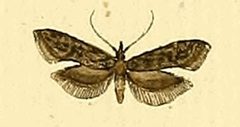
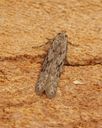
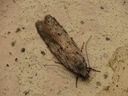
Members of Carpatolechia are small gelechiid moths with forewing lengths typically 6–7.5 mm. Forewings are generally greyish-brown with variable dark speckling and patterning; some exhibit raised patches of whitish or black scales on the mid-wing. Specific identification to species level requires examination of genitalia and reference to original descriptions.
Images
Habitat
occupy diverse environments including gardens, hedgerows, woodland, and agricultural . Specific associations vary by species: C. fugitivella occurs in gardens, hedgerows and woodland; C. decorella is found in pistachio orchards.
Distribution
Europe (central, northern, and scattered records east to Russia), Turkey (Kahramanmaraş region), East Asia (Korea), and North America. GBIF records confirm presence in Denmark, Norway, and Sweden.
Seasonality
activity varies by . C. fugitivella flies between June and early September and comes to light. Other species show similar summer periods, though specific timing is documented for few species.
Host Associations
- Ulmus (elm) - plantC. fugitivella associated with elm and wych elm
- Ulmus glabra (wych elm) - plantC. fugitivella
- Pistacia vera (pistachio) - plantC. decorella documented as pest
- Lissonota anatolica - described as potential agent for C. decorella
Life Cycle
C. fugitivella: laid on trees are thought to overwinter before hatching the following spring; caterpillars feed in folded leaves or leaf-spinnings before pupating on host tree bark. details for other are insufficiently documented.
Behavior
of some are attracted to light. C. fugitivella exhibits typical gelechiid of larval leaf-folding and spinning.
Ecological Role
Some function as herbivores on woody plants; C. decorella acts as a pest of pistachio . The serves as for , with documented parasitoid Lissonota anatolica described as a potential agent.
Human Relevance
C. decorella is documented as a pest of Pistacia vera (pistachio) in Turkey, with potential economic impact on pistachio . C. fugitivella was sequenced as part of the Darwin Tree of Life Project, contributing to lepidopteran genomic resources.
Similar Taxa
- Other Gelechiidae generaCarpatolechia require genitalia examination for definitive separation from related gelechiine ; external overlaps broadly with Litini tribe members
- TeleiodesFormerly included now placed in Teleiodes; historical taxonomic confusion requires reference to current systematic revisions
Sources and further reading
- BugGuide
- Wikipedia
- GBIF taxonomy match
- iNaturalist taxon
- NCBI Taxonomy
- Catalogue of Life
- Lissonota anatolica sp. nov. (Hymenoptera: Ichneumonidae: Banchinae) a parasitoid and potential pest control of Carpatolechia decorella (Haworth, 1828) (Lepidoptera: Gelechiidae) on Pistacia vera L.
- The genome sequence of the Elm Groundling moth, Carpatolechia fugitivella (Zeller, 1839).