
Neopalpa
Povolný, 1998
Species Guides
2- Neopalpa donaldtrumpi(Donald Trump Moth)
- Neopalpa neonata
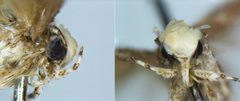
Neopalpa is a of small in the Gelechiidae, tribe Gnorimoschemini. The genus was established in 1998 and contains at least two described . It is most closely related to the genera Ochrodia and Ephysteris. One species, Neopalpa donaldtrumpi, gained international attention when described in 2017 due to its distinctive yellowish-white that resemble a particular hairstyle, and was named to draw attention to conservation needs for fragile desert .
Pronunciation
How to pronounce Neopalpa: //ˌniː.oʊˈpæl.pə//
These audio files are automatically generated. While they are not always 100% accurate, they are a good starting point.
Identification
Members of Neopalpa can be distinguished from related Ochrodia and Ephysteris by genitalic and external morphological features detailed in the original genus description. The genus is classified within the tribe Gnorimoschemini based on phylogenetic relationships.
Images
Habitat
in this inhabit sandy desert and dune environments. The type locality for N. donaldtrumpi is the Algodones Dunes, a region of wind-blown sand stretching across the border region of California, USA and Baja California, Mexico. The is described as fragile and under threat from urbanization and other human activities.
Distribution
The is found in southern California, Arizona, and northern Mexico (Baja California). The known range spans a narrow strip of along the Mexico–United States border.
Human Relevance
The received substantial media attention in 2017 when N. donaldtrumpi was described, with coverage from major news outlets and scientific blogs. The naming was explicitly intended to raise public awareness about the importance of conserving fragile that contain undescribed species. The of N. donaldtrumpi is housed at the Bohart Museum of Entomology, University of California, Davis.
Similar Taxa
- OchrodiaMost closely related within tribe Gnorimoschemini; distinguished by morphological and genitalic differences
- EphysterisAnother closely related in the same tribe; Neopalpa separated based on distinct diagnostic characters
Misconceptions
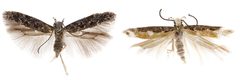
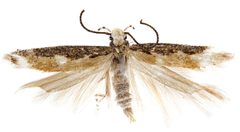
Fake images purporting to show N. donaldtrumpi with elaborate pink, black, orange and metallic green wing patterns and prominent blond hair tufts have circulated online. These images are actually modified photographs of butterflies ( Nymphalidae), not . The actual has small orange-yellow and brown wings with a wingspan under one centimeter, with yellowish-white on the .
More Details
Type species
The was established by Povolný in 1998. The type and additional species were reviewed by Nazari (2017), who described N. donaldtrumpi as the second known species in the genus.
Conservation significance
The discovery of new in this from the well-studied southern California region highlights that even densely populated and intensively surveyed areas may harbor undescribed micro-fauna, and that small, fragile remain important for biodiversity conservation.
Sources and further reading
- BugGuide
- GBIF taxonomy match
- iNaturalist taxon
- NCBI Taxonomy
- Catalogue of Life
- A Moth Like No Other: Neopalpa donaldtrumpi | Bug Squad
- A Moth Named for Trump, Snopes, and the Bohart Museum of Entomology | Bug Squad
- Celebrating National Moth Night at the Bohart Museum of Entomology | Bug Squad
- Eight weird and wonderful species to celebrate World Animal Day
- environment | Blog - Part 4
- 🎉Celebration time: here’s to 1,000 issues of ZooKeys! | Blog