
Rifseria fuscotaeniaella
(Chambers, 1878)
Rifseria fuscotaeniaella is a small and the sole in the Rifseria, Gelechiidae. It is to western North America, ranging from the Canadian prairies through the Rocky Mountain region to the Pacific coast. The species was originally described as Gelechia fuscotaeniaella by Chambers in 1878. It is associated with arid and semi-arid including sagebrush steppe and dry open woodlands.
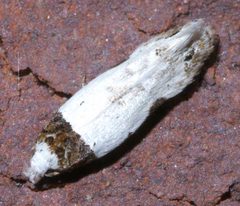
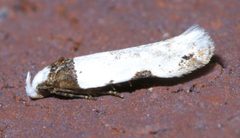
Pronunciation
How to pronounce Rifseria fuscotaeniaella: //rɪfˈsɛriə ˌfʌskoʊtiːniˈɛlə//
These audio files are automatically generated. While they are not always 100% accurate, they are a good starting point.
Identification
Distinguished from other small western North American gelechiids by geographic range and the combination of narrow forewings with dark transverse banding. The Rifseria may be distinguished from related genera by genitalic characters. Similar in the Gelechiinae require microscopic examination for definitive identification.
Images
Appearance
A small gelechiid with narrow, elongated forewings characteristic of the . The name fuscotaeniaella (from Latin fuscus 'dusky' and taenia 'band') suggests dark banding on the wings, though specific pattern details require specimen examination. Typical Gelechiidae includes a slender body, relatively long , and wings held roof-like over the body at rest.
Habitat
Occupies arid and semi-arid environments including sagebrush steppe, dry open woodlands, and montane parklands. Associated with Artemisia-dominated and open coniferous forests in the western United States and Canada.
Distribution
Western North America: from Manitoba and British Columbia south through the Rocky Mountains to eastern Colorado, Utah, Nevada, and Arizona, extending to coastal California. Records include the Canadian provinces of Alberta and British Columbia, and multiple western U.S. states.
Seasonality
period spans spring through early summer, with most records from April to July. Exact varies with elevation and latitude.
Similar Taxa
- Other GelechiidaeNumerous small gelechiid moths overlap in size and general appearance; require genitalic dissection or molecular analysis for separation from Rifseria.
- Gelechia speciesOriginal description placed this in Gelechia; these share narrow-winged but differ in genitalic structure.