
Chionodes mediofuscella
(Clemens, 1863)
black-smudged chionodes moth
Chionodes mediofuscella is a small in the Gelechiidae, commonly known as the black-smudged chionodes moth. It occurs across much of North America from Nova Scotia to Florida and west to British Columbia, Colorado, Arizona, and northern California. The larvae feed on giant ragweed (Ambrosia trifida).
Pronunciation
How to pronounce Chionodes mediofuscella: /ˌkaɪəˈnoʊdiːz ˌmiːdioʊfʌsˈsɛlə/
These audio files are automatically generated. While they are not always 100% accurate, they are a good starting point.
Identification
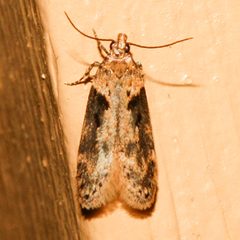
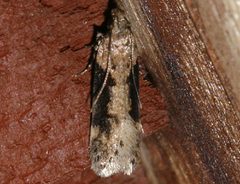
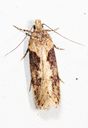
The combination of pale yellowish forewings with a dark brown costal spot, paired blackish-brown dots on the fold (one at the angle and one above), and shining pale grey hindwings distinguishes this from similar Chionodes species.
Images
Appearance
Forewings are pale yellowish with a dark brown spot along the . There is a blackish-brown dot at the angle on the fold and another above it. Hindwings are shining pale grey.
Distribution
North America: recorded from Nova Scotia to Florida, and from British Columbia to Colorado, Arizona, and northern California. Also present in Alberta, Canada.
Diet
Larvae feed on Ambrosia trifida (giant ragweed).
Host Associations
- Ambrosia trifida - larval food plantgiant ragweed
Similar Taxa
- Other Chionodes speciesSimilar small size and gelechiid wing shape; distinguished by specific forewing pattern of pale yellowish ground color with dark brown costal spot and paired blackish-brown dots on fold
More Details
Observation frequency
The has been documented in 5,776 iNaturalist observations, indicating it is relatively well-recorded.
Original description
First described by Clemens in 1863 as Gelechia mediofuscella.