
Dichomeris ochripalpella
(Zeller, 1873)
Shining Dichomeris Moth
A small gelechiid found in eastern North America. are recognized by distinctive steel-blue metallic markings on deep brown forewings. The was described by Zeller in 1873. Larvae are known to feed on plants in the Asteraceae .
Pronunciation
How to pronounce Dichomeris ochripalpella: //daɪˈkɒmərɪs oʊˌkraɪˌpælˈpɛlə//
These audio files are automatically generated. While they are not always 100% accurate, they are a good starting point.
Identification
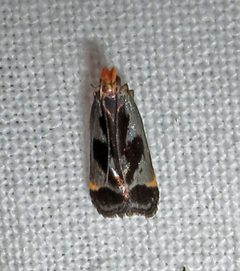
The combination of steel-blue metallic costal streak with its characteristic deep excision, the orange-yellow costal spot, and the series of steel-blue dots on the hindmargin distinguishes this from other Dichomeris. The shining blue markings are particularly distinctive among northeastern North American gelechiids. Similar species lack the pronounced excision in the costal streak and the specific pattern of metallic markings.
Images
Appearance
Small with forewings 5.4–6.5 mm in length. Forewings deep brown with a prominent steel-blue, shining streak running along the from base to an orange-yellow costal spot near the wing apex. The costal streak is deeply excised (notched) in the middle of the wing. Beneath this excision and near the inner margin lies a short, steel-blue streak. A slender line extends from the costal streak to the inner margin, opposite the orange-yellow spot. The hindmargin bears a series of steel-blue dots. Hindwings uniformly fuscous (dusky brown-gray).
Distribution
Eastern North America, from southern Quebec and southern Ontario southward through the northeastern and mid-Atlantic United States to New Jersey, North Carolina, and west to Arkansas. Records also include Vermont.
Seasonality
active from June to August.
Diet
Larvae feed on Aster and Solidago (Asteraceae).
Host Associations
- Aster - larval food plant in Asteraceae
- Solidago - larval food plant in Asteraceae
Similar Taxa
- Other Dichomeris speciesSimilar size and general body plan, but distinguished by the unique pattern of steel-blue metallic markings with the deeply excised costal streak and orange-yellow spot
More Details
Original description
First described as Gelechia ochripalpella by Philipp Christoph Zeller in 1873, later transferred to Dichomeris.