
Dichomeris ligulella
Hübner, 1818
palmerworm, Palmerworm Moth
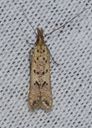
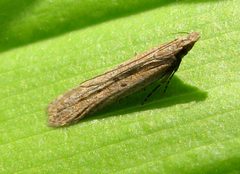
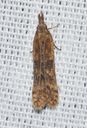
Dichomeris ligulella, commonly known as the palmerworm, is a small gelechiid native to eastern North America. are active from spring through fall with a single per year. The is economically notable as a foliar feeder on several hardwood trees and orchard crops.
Pronunciation
How to pronounce Dichomeris ligulella: /dɪkəˈmɛrɪs lɪɡjuˈlɛlə/
These audio files are automatically generated. While they are not always 100% accurate, they are a good starting point.
Identification
Distinguished from similar small gelechiid moths by combination of size (15–18 mm wingspan), eastern North American distribution, and seasonal period (April–October). Genitalia examination may be required for definitive separation from . The 'palmerworm' is historically applied to this in agricultural contexts.
Images
Habitat
Associated with deciduous forests and orchards where trees (oak, apple, hazel, hackberry) occur. Specific microhabitat preferences for not documented.
Distribution
Eastern North America. Documented from the conterminous 48 United States, with specific records from Vermont and adjacent regions. Canadian records include Manitoba and Saskatchewan, though these may represent peripheral or vagrant occurrences.
Seasonality
active from April to October. One per year ().
Diet
Larvae feed on foliage of apple (Malus), hackberry (Celtis), hazel (Corylus), and oak (Quercus). feeding habits not documented.
Host Associations
- apple - larval food plantMalus ; economically significant
- hackberry - larval food plantCeltis
- hazel - larval food plantCorylus
- oak - larval food plantQuercus
Life Cycle
: one per year. Larval development occurs on foliage. site not specified in available sources. stage not explicitly documented.
Behavior
activity spans April through October, suggesting extended or possible partial second , though sources specify one generation per year. Specific behavioral observations (mating, oviposition, larval feeding patterns) not documented in available sources.
Ecological Role
Herbivore: larval folivory on hardwood trees and shrubs. Potential role as prey for not documented.
Human Relevance
Minor agricultural pest on apple. The 'palmerworm' reflects historical recognition of larval damage in orchards. Not considered a major economic pest in contemporary agriculture.
Similar Taxa
- Other Dichomeris speciesNumerous in eastern North America with similar size and general appearance; reliable identification requires genitalia dissection or molecular analysis
- Other small GelechiidaeMany gelechiid moths share narrow-winged and brown coloration; association and geographic range help narrow identification
More Details
Etymology
The 'palmerworm' has biblical origins (Joel 1:4, Amos 4:9) and was historically applied to various caterpillars causing destructive defoliation. Its application to D. ligulella specifically reflects 19th-century American agricultural literature.
Taxonomic note
Authorship correctly cited as Hübner, 1818. The was originally described in the Anacampsis and later transferred to Dichomeris.