
Isophrictis similiella
(Chambers, 1872)
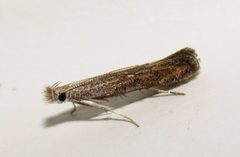
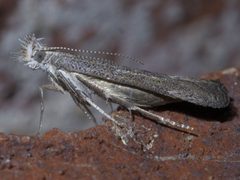
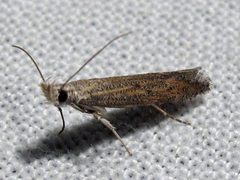
Isophrictis similiella is a small gelechiid described by V.T. Chambers in 1872. It is known from scattered localities across central and eastern North America. The has a wingspan of approximately 11 mm. Larvae are documented to bore into the receptacles of Solanum carolinense (Carolina horsenettle) and the flowerheads of Rudbeckia hirta (black-eyed Susan).
Pronunciation
How to pronounce Isophrictis similiella: /ˌaɪsəˈfrɪktɪs sɪˌmɪliˈɛlə/
These audio files are automatically generated. While they are not always 100% accurate, they are a good starting point.
Identification
The small size (11 mm wingspan) distinguishes it from larger gelechiids. Identification to level likely requires dissection or reference to genitalia , as external features are insufficiently documented for reliable field identification. Association with plants (Solanum carolinense, Rudbeckia hirta) may aid detection.
Images
Appearance
Small with wingspan approximately 11 mm. Specific wing pattern details are not well documented in available sources.
Habitat
Found in areas where plants occur: open fields, disturbed , and roadsides supporting Solanum carolinense and Rudbeckia hirta. Specific microhabitat preferences beyond host plant presence are not documented.
Distribution
Recorded from Kentucky, Arkansas, Illinois, Indiana, Maine, Manitoba, Massachusetts, Oklahoma, Pennsylvania, Saskatchewan, and Texas. Distribution appears to span the central and eastern United States and adjacent southern Canada.
Diet
Larvae bore in receptacle of Solanum carolinense (Solanaceae) and flowerheads of Rudbeckia hirta (Asteraceae). feeding habits are not documented.
Host Associations
- Solanum carolinense - larval larvae bore in receptacle
- Rudbeckia hirta - larval larvae bore in flowerheads
Life Cycle
Larval stage is documented; site and number of per year are not recorded. Complete details are unavailable.
Behavior
Larvae exhibit boring in plant reproductive structures. behavior is not documented.
Ecological Role
As a herbivore, larvae may influence seed production of plants through damage to receptacles and flowerheads. -level effects are not studied.
Human Relevance
No documented economic or medical significance. Potential minor impact on Rudbeckia hirta in ornamental settings.
Similar Taxa
- Isophrictis speciesCongeneric may overlap in distribution and size; reliable separation requires examination of genitalia or association records.
- Other small GelechiidaeNumerous small gelechiids share similar size and general appearance; -level identification requires knowledge.
More Details
Taxonomic note
Originally described as Gelechia similiella by Chambers in 1872; later transferred to Isophrictis.
Host plant specificity
The documented use of two plants from different (Solanaceae and Asteraceae) is unusual and may indicate either polyphagy or misidentification of similar larvae; this warrants verification.