
Psilocorsis reflexella
Clemens, 1860
Dotted Leaftier Moth
Psilocorsis reflexella is a small in the Depressariidae. Larvae are leaf-tiers that bind oak leaves together to form shelters. The serves as prey for solitary , particularly mason wasps in the Ancistrocerus. It occurs across eastern and central North America.
Pronunciation
How to pronounce Psilocorsis reflexella: /ˌsɪloʊˈkɔːrsɪs ˌrɛfləkˈsɛlə/
These audio files are automatically generated. While they are not always 100% accurate, they are a good starting point.
Identification
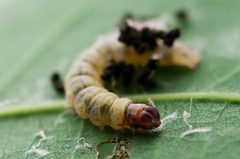
Small size (14–17 mm wingspan) distinguishes this from larger leaf-roller . The larval shelter—two or more oak leaves bound together in a flat 'sandwich' configuration—differs from the rolled or folded shelters of many related . lack strong wing patterning, making identification to species level difficult without dissection or molecular analysis.
Images
Appearance
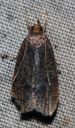
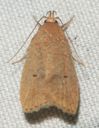
are small with a wingspan of 14–17 mm. The forewings are narrow and relatively unmarked. Overall coloration is subdued, typical of many small Depressariidae.
Habitat
Deciduous woodlands and forest edges with oak (Quercus) trees. Larvae occur specifically on oak foliage.
Distribution
Eastern and central North America. Documented from Georgia, Illinois, New Jersey, New York, Oklahoma, Tennessee, Vermont, Manitoba, and Saskatchewan.
Diet
Larvae feed on Quercus (oak) . feeding habits are unknown.
Host Associations
- Quercus - larval food plantoak
Life Cycle
Complete . Larvae construct leaf-tie shelters by binding two or more oak leaves together with silk, feeding within this protected space. occurs within the shelter. Specific timing of is not well documented.
Behavior
Larvae are leaf-tiers, not leaf-rollers, creating multi-leaf 'sandwich' shelters rather than rolling single leaves. This has been observed to attract by mason wasps (Ancistrocerus campestris) that attempt to extract caterpillars from their shelters.
Ecological Role
Larval herbivore on oak foliage. Serves as prey for solitary , contributing to connections between Lepidoptera and Hymenoptera.
Human Relevance
Minor pest potential on ornamental oaks. Primarily of ecological interest as a documented prey item for beneficial .
Similar Taxa
- Psilocorsis sp.congeneric with similar leaf-tying on oak; identification requires detailed examination
- Leaf-roller moths (Tortricidae, some Pyralidae)similar larval shelter-building , but typically roll or fold single leaves rather than binding multiple leaves flat
More Details
Taxonomic Note
placement has varied; some sources list this in Amphisbatidae or Oecophoridae. Current consensus places it in Depressariidae.
Predation Ecology
Documented prey of Ancistrocerus campestris, which hunts by attempting to tear into leaf shelters or extract caterpillars from edges.