Agonopterix fusciterminella
Clarke, 1941
Agonopterix fusciterminella is a small in the Depressariidae, described by Clarke in 1941. It is found in western and eastern North America, with records from California to British Columbia and from North Carolina to Tennessee. The has a wingspan of 22–25 mm and exhibits distinctive reddish-brown and fuscous forewing patterning. Larvae are known to feed on specific plants in the Asteraceae family.
Pronunciation
How to pronounce Agonopterix fusciterminella: //ˌæɡəˈnɒptərɪks ˌfʌsɪˌtɜːrmɪˈnɛlə//
These audio files are automatically generated. While they are not always 100% accurate, they are a good starting point.
Identification
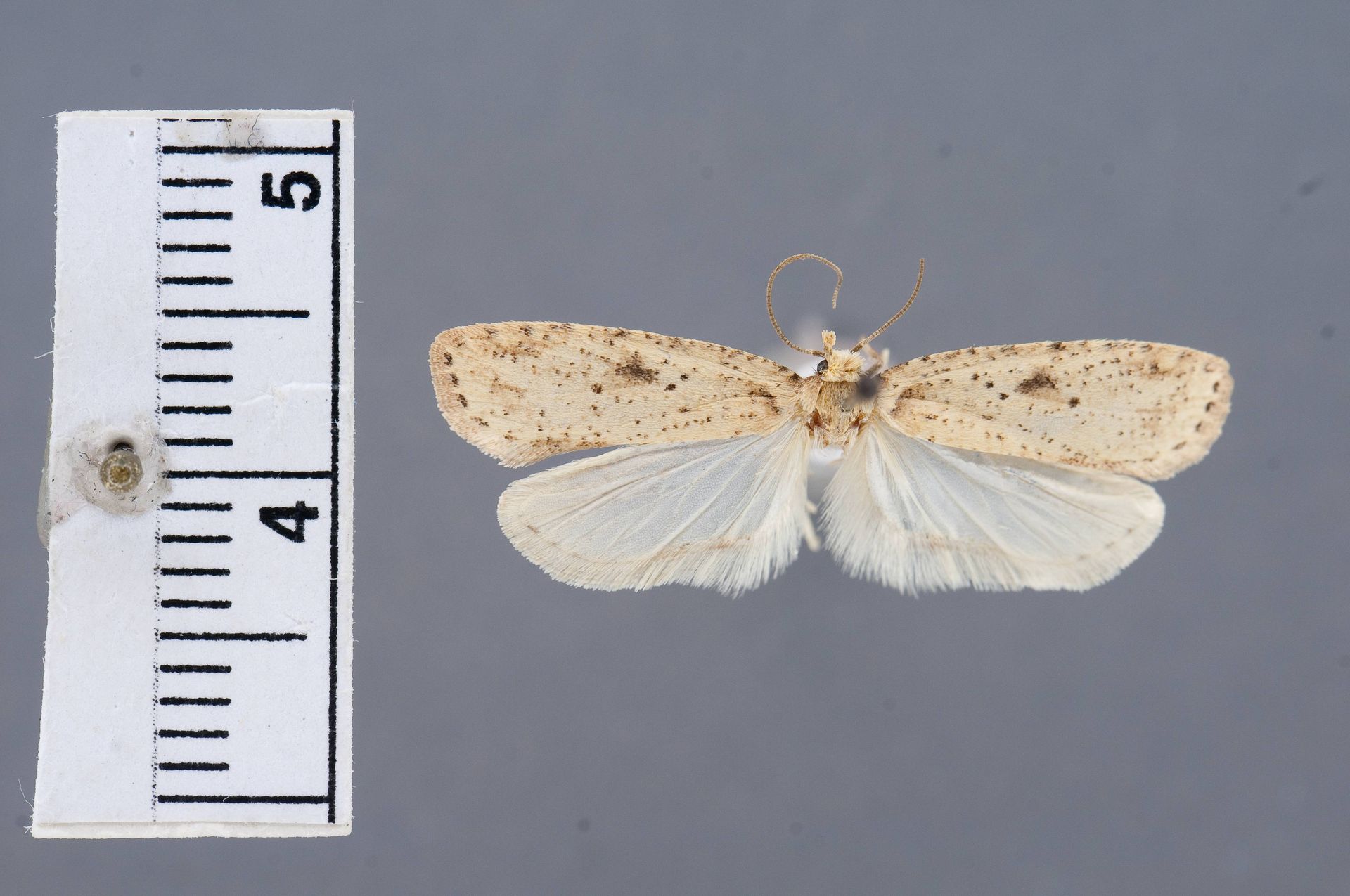
Distinguished from similar Agonopterix by combination of: ochreous forewing base with strong red-brown patch in half; two small black spots at base followed by fuscous/black cloud with surrounding reddish-brown suffusion; whitish hindwings with fuscous suffusion. Specific wing pattern elements, particularly the red-brown patch and black cloud arrangement, appear diagnostic.
Images
Appearance
Wingspan 22–25 mm. Forewings ochreous, overlaid with reddish brown and sprinkled with fuscous to black scales. Extreme base ochreous, with half followed by strong red-brown patch. Two small black spots at base of , followed by strong fuscous or black cloud surrounded by reddish-brown suffusion. Hindwings whitish, suffused apically with fuscous.
Distribution
North America: California to southern British Columbia; North Carolina; Tennessee. Additional records from Alberta, Manitoba, and Saskatchewan (Canada).
Diet
Larvae feed on Senecio aronicoides and Cacaliopsis nardosmia (both Asteraceae). diet not documented.
Host Associations
- Senecio aronicoides - larval
- Cacaliopsis nardosmia - larval
Similar Taxa
- Other Agonopterix speciesSimilar general body plan and size; distinguished by specific forewing pattern elements (red-brown patch, black spot and cloud arrangement, hindwing suffusion).
- Other Depressariidae-level resemblance in wing shape and resting posture; requires examination of wing pattern details for separation.
More Details
Taxonomic history
Described by John Frederick Gates Clarke in 1941. Clarke was a prominent American lepidopterist who described numerous North American microlepidoptera .