
Pyroderces
Herrich-Schäffer, 1853
cosmet moths
Species Guides
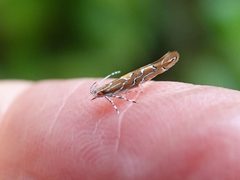
1Pyroderces is a of small in the Cosmopterigidae, Cosmopteriginae. The genus includes with diverse ecological roles: some, such as Pyroderces rileyi, are agricultural pests of banana and other crops, while others have been identified as potential supplementary of oil palm in Malaysia. The genus was established by Herrich-Schäffer in 1853. Taxonomic boundaries remain fluid, with some authors including the genus Anatrachyntis within Pyroderces.
Pronunciation
How to pronounce Pyroderces: /paɪˈrɒdərsiːz/
These audio files are automatically generated. While they are not always 100% accurate, they are a good starting point.
Identification
Pyroderces are small typical of the Cosmopterigidae . Species-level identification requires examination of genitalia or molecular analysis. Pyroderces rileyi larvae are pinkish caterpillars known as "pink scavenger caterpillars." males of P. rileyi are attracted to traps baited with (E)-11-tetradecenyl acetate.
Images
Habitat
Agricultural and plantation environments. Pyroderces rileyi occurs in banana plantations. Unidentified Pyroderces sp. have been documented in oil palm plantations in Malaysia. The has also been recorded on cotton, sorghum, and maize.
Distribution
Widespread across tropical and subtropical regions. Pyroderces rileyi occurs in Jamaica and has been recorded on multiple crops worldwide. Unidentified Pyroderces sp. are to Malaysia.
Diet
Larvae of Pyroderces rileyi feed on banana fruits, causing scarring through faecal pellet deposition. Larval abundance increases with bunch age, correlated with decreased latex content in maturing fruit.
Host Associations
- Musa spp. (banana) - larval food plantprimary of Pyroderces rileyi in Jamaica; larval feeding causes fruit scarring
- Elaeis guineensis (oil palm) - pollination associationPyroderces sp. documented as prior to 1981 introduction of Elaeidobius kamerunicus
- Gossypium spp. (cotton) - plantrecorded for Pyroderces rileyi
- Sorghum spp. (sorghum) - plantrecorded for Pyroderces rileyi
- Zea mays (maize) - plantrecorded for Pyroderces rileyi
Life Cycle
Pyroderces rileyi completes development from to in approximately 37 days under tropical conditions. Larval numbers increase with fruit bunch age.
Behavior
male Pyroderces rileyi respond to synthetic lures containing (E)-11-tetradecenyl acetate. Some engage in flower visitation and pollen transfer. Larvae produce faecal pellets that scar fruit.
Ecological Role
Dual role across : Pyroderces rileyi acts as a scavenger and pest in agricultural systems, while unidentified Pyroderces sp. serve as of oil palm in Malaysia, potentially complementing the introduced weevil pollinator Elaeidobius kamerunicus through temporal, spatial, or morphological advantages.
Human Relevance
Agricultural pest and potential biocontrol asset. Pyroderces rileyi causes economic damage to banana production in Jamaica through fruit scarring; deflowering is an effective control measure. Unidentified Pyroderces sp. are under investigation for mass-rearing as supplementary oil palm to increase fruit set and stabilize yield.
Similar Taxa
- AnatrachyntisSome authors include Anatrachyntis within Pyroderces; the two have historically overlapping concepts and require taxonomic revision for clear separation
- Pyroderces simplexClosely related with similar chemistry; (E)-11-tetradecen-1-ol is present in P. simplex but does not enhance attractancy when added to P. rileyi lures
More Details
Taxonomic Uncertainty
The generic limits of Pyroderces remain unresolved, with Anatrachyntis treated as congeneric by some authors. This affects identification and literature interpretation.
Pollination Research Context
Research on Pyroderces sp. as oil palm in Malaysia represents a proposal stage rather than completed findings. Mass-rearing techniques and alternative substrates (banana fruits, Gardenia jasminoides, Hydrangea macrophylla, Dianthus caryophyllus, Rosa rugosa) are under development.
Sources and further reading
- BugGuide
- Wikipedia
- GBIF taxonomy match
- iNaturalist taxon
- NCBI Taxonomy
- Catalogue of Life
- Uplifting Oil Palm Pollination and Fruit Set Formation Through Population Enhancement of Pyroderces sp. and Thrips hawaiiensis
- The biology, ecology and economic importance of the pink scavenger caterpillar Pyroderces rileyi (Lepidoptera: Cosmopterigidae) on banana in Jamaica