
Anatrachyntis
Meyrick, 1915
pink scavenger moths, pandanus flower moths
Species Guides
2- Anatrachyntis badia(Florida Pink Scavenger)
- Anatrachyntis rileyi(pink cornworm)
Anatrachyntis is a of small in the Cosmopterigidae, established by Meyrick in 1915. The genus contains approximately 60 described distributed across tropical and subtropical regions worldwide, with particularly high diversity in the Indo-Pacific region, Africa, and Australia. Some taxonomists include this genus within Pyroderces, though this classification remains disputed. Several species have documented ecological associations, including on spider and herbivory on plants.

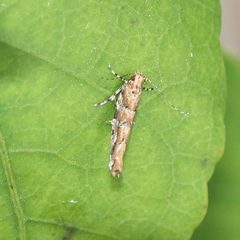
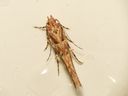
Pronunciation
How to pronounce Anatrachyntis: /ˌænətrəˈkɪntɪs/
These audio files are automatically generated. While they are not always 100% accurate, they are a good starting point.
Identification
Members of this are small with narrow, elongated wings typical of the Cosmopterigidae. Distinguishing Anatrachyntis from the closely related genus Pyroderces requires examination of genitalia and wing venation patterns; external characters alone are insufficient for reliable separation. -level identification relies on subtle differences in wing pattern, coloration, and genital structure.
Images
Habitat
occur in diverse tropical and subtropical environments including coastal , forests, and agricultural areas. Specific microhabitats vary by species: some are associated with palms and pandanus plants, while others inhabit areas where spiders construct sacs.
Distribution
Widespread across tropical and subtropical regions: Indo-Pacific (India, Sri Lanka, Southeast Asia, Indonesia, Philippines, New Guinea, Australia, New Zealand, Pacific islands including Fiji, Marquesas, Lord Howe Island, Seychelles), Africa (Zaire, Senegal, Gambia, Egypt, Tanzania, South Africa), and introduced in North America (Florida).
Diet
Larvae of Anatrachyntis terminella have been documented as predacious on of the spider Nephila edulis. Larvae of A. incertulella feed on pandanus flowers. Larvae of A. rileyi and A. badia are known pests of corn and other crops, feeding on plant material. Diet varies considerably across and remains undocumented for most.
Host Associations
- Nephila edulis - larvae of A. terminella feed on spider within egg sacs
- Pandanus - herbivorelarvae of A. incertulella feed on flowers
- Zea mays - pestlarvae of A. rileyi feed on corn
- Sesamum - pestlarvae of A. sesamivora feed on sesame
Life Cycle
Complete with , larva, pupa, and stages. In A. terminella, larvae pupate within the silk of the spider's egg sac. Specific details of developmental duration and voltinism vary by and are poorly documented for most.
Behavior
Larvae of at least one (A. terminella) exhibit predatory , actively feeding on spider within protective egg sacs. This represents an unusual feeding strategy within Lepidoptera. behavior is poorly documented; likely given characteristics.
Ecological Role
Some function as of spider , potentially influencing spider . Others act as herbivores on plants, with a few species reaching pest status on agricultural crops. The occupies diverse trophic positions across its range.
Human Relevance
Anatrachyntis rileyi (pink cornworm, pink bud ) and A. badia (Florida pink scavenger) are recognized agricultural pests. A. incertulella is known as the pandanus flower moth. The has minor economic significance in corn, sesame, and ornamental plant production.
Similar Taxa
- PyrodercesClosely related with disputed boundaries; some authors subsume Anatrachyntis within Pyroderces. Separation requires genitalia examination.
- CosmopterixSame (Cosmopterigidae) with similar small size and narrow wings; distinguished by wing pattern and genital .
More Details
Taxonomic Uncertainty
The generic limits between Anatrachyntis and Pyroderces remain unresolved, with different authorities treating the group variously as separate or as congeneric.
Predatory Larvae
The - of A. terminella is notable within Lepidoptera, where larval carnivory is relatively uncommon and specialized spider egg predation is rare.