
Eteobalea
Hodges, 1962
Species Guides
3- Eteobalea iridella
- Eteobalea sexnotella
- Eteobalea wyattella(Wyatt's Cosmet Moth)
Eteobalea is a of small in the Cosmopterigidae, established by Hodges in 1962. Some authors treat it as a synonym of Stagmatophora. in this genus are root miners, with larvae feeding internally on plant roots. Eteobalea serratella has been investigated as a agent for yellow toadflax (Linaria vulgaris) in agricultural systems.
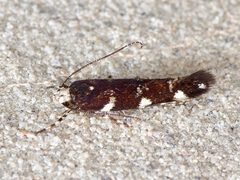
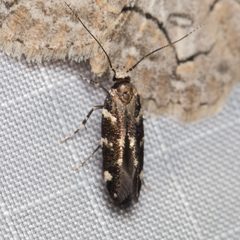
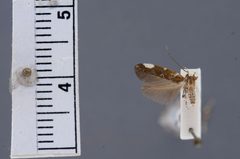
Pronunciation
How to pronounce Eteobalea: /ˌɛ.te.oʊˈbæ.lɛ.ə/
These audio files are automatically generated. While they are not always 100% accurate, they are a good starting point.
Images
Habitat
Agricultural fields and natural areas where plants occur; documented in peppermint (Mentha piperita) production systems where yellow toadflax is present as a weed.
Distribution
Records from Denmark (DK) and Sweden (SE); natural range includes areas where yellow toadflax (Linaria vulgaris) occurs; studied in Wisconsin, USA in contexts.
Diet
Larvae are root miners feeding on roots of yellow toadflax (Linaria vulgaris). Eteobalea serratella is highly -specific, attacking only yellow toadflax in no-choice tests, rejecting related in Scrophulariaceae and Labiatae.
Host Associations
- Linaria vulgaris - primary Yellow toadflax; sole documented for E. serratella through controlled host specificity testing
Life Cycle
Larval stage consists of root miners feeding internally on plant roots. Continuous mining through winter has been observed to affect plant growth in subsequent spring. stage involved in host location and oviposition.
Behavior
Larvae engage in root mining , tunneling within roots and causing damage that disrupts dominance. demonstrate high host specificity, attacking only yellow toadflax even when related plant are available.
Ecological Role
Acts as a agent for the weed yellow toadflax. Root mining damage reduces plant competitive ability, decreases seed weight, and shortens flowering season. Combined with crop competition, can reduce weed root by up to 65%.
Human Relevance
Investigated as a biocontrol agent for yellow toadflax management in peppermint production and other agricultural systems. Provides an alternative to glyphosate for controlling this weed in crops where herbicide options are limited.
Similar Taxa
- StagmatophoraTreated as a synonym of Eteobalea by some authors; the two appear to share similar and root-mining in Cosmopterigidae.
More Details
Taxonomic Status
Eteobalea is accepted as a valid by Catalogue of Life and GBIF, though some authors synonymize it with Stagmatophora. The genus contains approximately 25 described .
Research Focus
Most ecological research on Eteobalea has focused on E. serratella as a potential biocontrol agent. Less is known about other in the , though they presumably share similar root-mining habits on related plants.
Sources and further reading
- BugGuide
- Wikipedia
- GBIF taxonomy match
- iNaturalist taxon
- NCBI Taxonomy
- Catalogue of Life
- Biological control of yellow toadflax (Linaria vulgaris) byEteobalea serratellain peppermint (Mentha piperita)
- Impact of root mining by Eteobalea spp. on clonal growth and sexual reproduction of common toadflax, Linaria vulgaris Mill.