
Anatrachyntis rileyi
(Walsingham, 1882)
pink cornworm, pink bud moth, pink scavenger, Pink Scavenger Caterpillar Moth
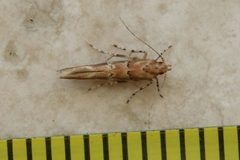
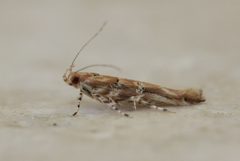
A small in the Cosmopterigidae, described from the southern United States in 1882 but likely introduced to North America from elsewhere. It has established across warm and tropical regions worldwide, including the Americas, Pacific islands, and parts of Africa and Asia. The is known by multiple reflecting its association with corn and its scavenging habits.
Pronunciation
How to pronounce Anatrachyntis rileyi: /ænətrəˈkɪntɪs ˈraɪliːaɪ/
These audio files are automatically generated. While they are not always 100% accurate, they are a good starting point.
Images
Distribution
Warm and tropical regions globally. Documented from: northern Australia, Galápagos Islands, Hawaii, the Antilles, South America, Mauritius, Japan, Uganda, South Africa, and the continental United States (southern origin, now widespread).
Host Associations
- Zea mays - pest 'pink cornworm' indicates association with corn, though specific damage patterns are not detailed in available sources
Human Relevance
Agricultural pest of corn; suggest economic significance in corn production, though specific impact levels are not quantified in available sources.
Similar Taxa
- PyrodercesFormerly classified under this ; separation requires examination of genitalic characters and wing venation patterns
More Details
Taxonomic History
Originally described as Pyroderces rileyi by Walsingham in 1882; later transferred to Anatrachyntis. The epithet honors someone with surname Riley, likely the prominent entomologist Charles Valentine Riley.
Biogeographic Origin
Described from the southern United States in 1882, but considered probably an introduction to North America rather than native. Its broad pantropical distribution supports this hypothesis.
Sources and further reading
- BugGuide
- Wikipedia
- GBIF taxonomy match
- iNaturalist taxon
- Catalogue of Life
- Soybean Insects: Mid-to-Late Season Pests (V8 to Maturity) - AgriLife Extension Entomology
- It’s a Mayfly…It’s a Moth…It’s Thyridopteryx | Beetles In The Bush
- Bug Eric: Wasp Wednesday: Neorileya
- Recent literature – The Coleopterists Bulletin | Beetles In The Bush
- Curious Scientific Names Can Make Insects Famous
- moths | Beetles In The Bush | Page 4