
Batrachedra pinicolella
(Zeller, 1839)
Pine Cosmet
A small conifer-feeding in the Batrachedridae. Formerly cryptic within a , integrative taxonomic studies using , nuclear markers, and ddRAD sequencing distinguished it from the newly described B. confusella. It has a boreo-montane distribution pattern and is associated primarily with Norway spruce.
Pronunciation
How to pronounce Batrachedra pinicolella: //bætrəˈkiːdrə ˌpaɪnɪkoʊˈleɪlə//
These audio files are automatically generated. While they are not always 100% accurate, they are a good starting point.
Identification
Genetic analysis (, EF-1α, MDH, ddRAD) provides definitive separation from B. confusella sp. nov. Morphological examination of genitalia and subtle external features supports identification. Associated with Picea abies rather than Pinus sylvestris, which distinguishes it ecologically from B. confusella where ranges overlap.
Images
Appearance
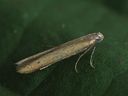
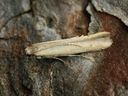
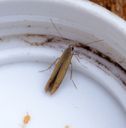
Small with wingspan 9–13 mm. Forewings narrow with subtle patterning. Distinguishable from B. confusella by subtle morphological differences supported by genetic divergence; precise external diagnostic characters require examination.
Habitat
and boreo-montane forests dominated by Norway spruce. Found in coniferous woodlands at northern latitudes and higher elevations.
Distribution
parts of North and Central Europe; introduced to Canada. Core range includes Scandinavia, northern Germany, Poland, and other boreal forest regions of the continent.
Seasonality
active mid June to August or September; single per year. Larvae present September through May.
Diet
Larvae mine needles of Norway spruce (Picea abies). One exceptional record from silver fir (Abies alba) in Slovakia.
Host Associations
- Picea abies - primary larval Proved plant; lectotype designated from Salzbrunn Picea locality
- Abies alba - exceptional larval Single proven record from Slovakia
Life Cycle
Young larvae mine needles of plant. Larval development occurs from September through May, with following . with one annually.
Behavior
Larvae are needle miners, feeding internally within conifer needles before completing development.
Ecological Role
herbivore of Norway spruce in forest . Contributes to nutrient cycling through needle mining activity.
Human Relevance
Subject of taxonomic research revealing cryptic diversity through integrative methods. Introduced in Canada suggests potential as a non-native in North American coniferous forests.
Similar Taxa
- Batrachedra confusellaFormerly confused under B. pinicolella; distinguished by (, nuclear markers, ddRAD), distribution (temperate vs. boreo-montane), and plant (Pinus sylvestris vs. Picea abies)
- Batrachedra parvulipunctellaSimilar congeneric in Europe; distinguished by range, associations, and subtle morphological features
Misconceptions
Long treated as a single widespread ; genetic and morphological data revealed it comprised two distinct species, with B. confusella described as new in 2021.
More Details
Taxonomic history
Lectotype designated from Salzbrunn (Picea locality) to stabilize following split. Original description by Zeller in 1839 as Cosmopteryx pinicolella.
Cryptic species discovery
Discovered during European Lepidoptera initiative. Two distinct COI barcode clusters prompted integrative investigation using additional nuclear markers and ddRAD sequencing, confirming reproductive isolation and supporting -level divergence.