
Dyseriocrania griseocapitella
(Walsingham, 1898)
Chinquapin leaf-miner, Chinquapin Leafminer Moth
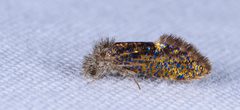
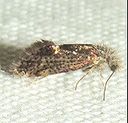
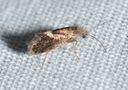
Dyseriocrania griseocapitella is a small in the Eriocraniidae, commonly known as the Chinquapin leaf-miner. are active from late February to late May, with males having slightly larger wingspans than females. The larvae are leaf miners on Castanea and Quercus , creating distinctive mines that begin as narrow serpentine tracks before expanding into large blotches.
Pronunciation
How to pronounce Dyseriocrania griseocapitella: /daɪˌsɛɹi.oʊˈkreɪniə ˌɡrɪsi.oʊ.kæpɪˈtɛlə/
These audio files are automatically generated. While they are not always 100% accurate, they are a good starting point.
Identification
Distinguished from other Eriocraniidae by the combination of golden bronze forewings with minute dark speckling and grayish hindwings with purplish luster. The larval leaf mine is diagnostic: beginning as a narrow linear passage toward the leaf margin, then expanding into a large inflated blotch that typically obliterates the early serpentine stage.
Images
Habitat
Deciduous forests and woodlands containing plants Castanea and Quercus . Larval is within leaves of these host trees.
Distribution
Eastern North America: from Nova Scotia south to Florida, west to Illinois and Mississippi.
Seasonality
fly from late February to late May. One per year.
Diet
Larvae feed on Castanea and Quercus , mining leaves. diet not documented.
Host Associations
- Castanea - larval
- Quercus - larval
Life Cycle
One per year. Larvae mine leaves of plants, then drop to ground and burrow into soil to pupate within a tough oval cocoon of silk and soil particles. in late winter to spring.
Behavior
are or flyers in early spring. Larvae are endophagous leaf miners with a characteristic two-stage mining pattern: initial narrow serpentine track followed by expansion into large blotch mine.
Ecological Role
Larval leaf mining may cause localized damage to foliage. Role in poorly documented; likely prey for .
Human Relevance
Minor potential as pest of chestnut and oak foliage, though not considered economically significant. references chinquapin (Castanea pumila group), a historically important food source for peoples and wildlife.
Similar Taxa
- Other Eriocraniidae speciesShare small size, metallic forewing coloration, and early spring period; distinguished by specific wing color patterns and larval associations
- Nepticulidae leaf minersSimilar leaf mining habit and small size; distinguished by different and larval mine patterns
More Details
Cocoon construction
Larvae construct a relatively tough oval cocoon incorporating silk and small soil particles, which may provide protection during the extended pupal period.