
Albuna fraxini
(Edwards, 1881)
Virginia Creeper Clearwing
Albuna fraxini, commonly known as the Virginia Creeper Clearwing, is a clearwing moth in the Sesiidae. The is native to the northern United States and southern Canada. are active during summer months and are notable for their -mimicking appearance. The larvae develop within the stems of woody plants including Virginia creeper and various ash species.
Pronunciation
How to pronounce Albuna fraxini: /ˈælbjʊnə ˈfræksɪnaɪ/
These audio files are automatically generated. While they are not always 100% accurate, they are a good starting point.
Identification
Distinguished from other clearwing moths by combination of small size (18 mm wingspan), specific period (June-August), and geographic range. Most similar to other Albuna ; precise identification may require examination of genitalia or larval association. The Virginia creeper clearwing can be separated from the related Synanthedon species by subtle differences in wing venation and body proportions.
Images
Appearance
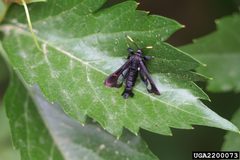
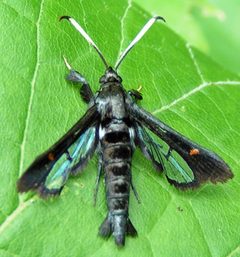
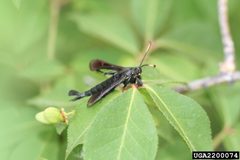
Small clearwing moth with wingspan approximately 18 mm. Wings are largely transparent with dark borders, characteristic of the Sesiidae . Body coloration mimics , with yellow and black banding patterns. are relatively long and slender.
Habitat
Associated with deciduous woodlands and forest edges where plants occur. Larvae inhabit stems of Virginia creeper and ash trees. are found in areas with flowering vegetation for nectar sources.
Distribution
Northern United States and southern Canada. Specific records include Vermont and broader Nearctic region distribution.
Seasonality
active from June to August. Adult lifespan approximately one week. Single per year inferred from period.
Diet
Larvae feed internally on stems of Virginia creeper (Parthenocissus quinquefolia), white ash (Fraxinus americana), red ash (Fraxinus pennsylvanica), green ash (Fraxinus pennsylvanica var. subintegerrima), European ash (Fraxinus excelsior), and occasionally mountain-ash (Sorbus ). feeding habits not documented in sources.
Host Associations
- Parthenocissus quinquefolia - larval Virginia creeper
- Fraxinus americana - larval white ash
- Fraxinus pennsylvanica - larval red ash
- Fraxinus pennsylvanica var. subintegerrima - larval green ash
- Fraxinus excelsior - larval European ash
- Sorbus - larval mountain-ash, occasional
Life Cycle
Complete with , larva, pupa, and stages. Larvae are stem borers in plants. occurs within host stems. Adults emerge in summer. Females emit shortly after to attract mates.
Behavior
Females release soon after emerging from pupae to attract males. are and , active during daylight hours and twilight. pattern and appearance mimic , likely providing protection from . Adults are short-lived, with lifespan of approximately one week.
Ecological Role
Larval stem-boring activity may contribute to nutrient cycling in woody plants. may serve as of flowering plants during nectar feeding. Was mimicry reduces pressure, potentially influencing local -prey dynamics.
Human Relevance
Minor potential as pest of ornamental ash trees and Virginia creeper in . Not considered economically significant. May be encountered by gardeners and naturalists due to activity and distinctive appearance.
Similar Taxa
- Synanthedon speciesOther clearwing moths with similar -mimicking appearance; differ in associations, size, and geographic distribution
- Other Albuna speciesCongeneric clearwings requiring detailed examination for separation; may differ in plant use and
More Details
Taxonomic History
Originally described as Carmenta fraxini by Edwards in 1881, later transferred to Albuna.
Conservation Status
Not formally assessed; appears secure based on wide distribution and use within ash and Virginia creeper.
Research Needs
feeding and precise larval development timing remain undocumented. trends warrant monitoring given widespread ash decline from emerald ash borer.