
Synanthedon mellinipennis
(Boisduval, 1836)
Ceanothus Borer Moth
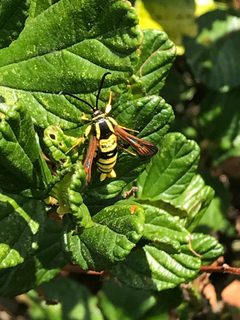
Synanthedon mellinipennis is a clearwing moth in the Sesiidae, commonly known as the Ceanothus Borer . Like other sesiids, it exhibits mimicry through transparent wings and hymenopteran-like body form. The is associated with Ceanothus plants, with larvae boring into stems or roots. are and generally not attracted to light traps.
Pronunciation
How to pronounce Synanthedon mellinipennis: //sɪ.nænˈθiː.dɒn ˌmɛlɪˈnaɪˌpɛnɪs//
These audio files are automatically generated. While they are not always 100% accurate, they are a good starting point.
Identification
Distinguished from other clearwing moths by association with Ceanothus and specific wing venation and scaling patterns. Most similar to other Synanthedon , particularly those in the mellinipennis species group. Accurate identification often requires examination of genitalia or molecular confirmation. Resembles in , but perching and wing posture differ.
Images
Habitat
Associated with containing Ceanothus , including chaparral, scrubland, and open woodlands. Larval habitat is within living stems or roots of plants. found in vicinity of host stands.
Distribution
Nearctic region. Records indicate presence in western North America where Ceanothus occurs.
Seasonality
active during warmer months; specific period varies with latitude and elevation. activity pattern.
Diet
Larvae bore into and feed on tissues of Ceanothus . feeding habits unknown; may take nectar or not feed as adults.
Host Associations
- Ceanothus - larval Larvae are stem or root borers in living plants
Life Cycle
Complete . laid on or near plant. Larvae tunnel into stems or roots, feeding internally and causing gall-like swellings or visible . occurs within tunnel or in soil. emerge and are active during day.
Behavior
activity. rarely attracted to artificial light sources. Males may be attracted to lures. Flight rapid and -like, contributing to mimicry. Perching observed on vegetation.
Ecological Role
Larval boring creates entry points for other organisms and may influence plant vigor. Contributes to mimicry complex in Lepidoptera. Pollination role, if any, unstudied.
Human Relevance
Minor economic concern when Ceanothus is cultivated as ornamental. Larval boring can damage or kill cultivated plants. Occasionally encountered by collectors using lures.
Similar Taxa
- Other Synanthedon speciesShare clearwing and mimicry; require detailed examination or association for separation
- Euhagena nebraskaeSimilar clearwing appearance and , but distinct wing pattern and different associations
- Melittia speciesAnother sesiid with mimicry, but generally larger with different wing shape and abdominal patterning
More Details
Collection methods
are seldom collected at light traps. lures are effective for males. Visual searching near plants during daytime period can yield specimens.
Taxonomic note
Part of the mellinipennis group within Synanthedon; precise boundaries of species concepts in this group have required revision.