
Sannina
Walker, 1856
Species Guides
1- Sannina uroceriformis(Persimmon Borer Moth)
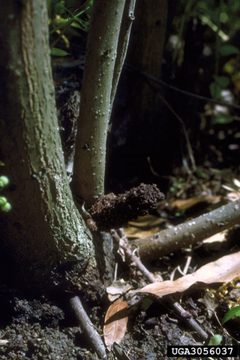
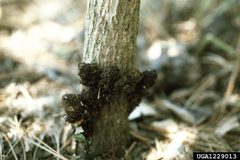
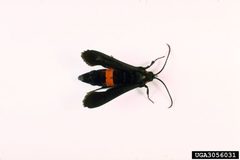
Sannina is a of clearwing moths in the Sesiidae. The genus contains a single described , Sannina uroceriformis. These are known for their -mimicking appearance, a trait common among sesiid moths. The genus was established by Francis Walker in 1856.
Pronunciation
How to pronounce Sannina: /sænˈniːnə/
These audio files are automatically generated. While they are not always 100% accurate, they are a good starting point.
Identification
Sannina uroceriformis can be distinguished from other sesiid by its elongated body form and the specific pattern of transparent wings with dark scaling along the and margins. The name "uroceriformis" refers to its resemblance to wood wasps in the Siricidae ( Urocerus). Accurate identification to species level requires examination of genitalia or molecular markers.
Images
Distribution
Sannina uroceriformis has been recorded from North America, with observations spanning from the eastern United States to parts of Canada. Specific distribution details beyond general North American range are limited in published sources.
Similar Taxa
- SynanthedonBoth belong to the tribe Synanthedonini and share similar clearwing and -mimicry; Sannina can be distinguished by its more elongated body and specific wing venation patterns
- AlbunaAnother North American sesiid with transparent wings; differs in body proportions and wing scaling patterns
- Urocerus (Siricidae)Wood wasps that Sannina uroceriformis visually mimics; distinguished by having four wings ( have two pairs of wings, though forewings and hindwings are coupled), different structure, and -like waist constriction
More Details
Monotypic genus
Sannina is currently considered a , containing only the single Sannina uroceriformis. The genus-level distinctiveness has been supported by morphological and molecular studies placing it within the Synanthedonini.
Taxonomic history
The was described by Francis Walker in 1856 based on specimens that exhibited the distinctive uroceriform (wood wasp-like) appearance. Its placement within Sesiidae has remained stable, though relationships within the Synanthedonini continue to be refined.