
Chamaesphecia empiformis
(Esper, 1783)
cypress spurge clearwing
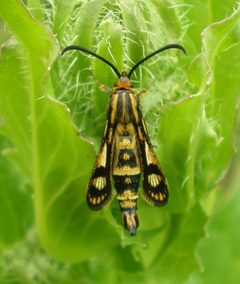
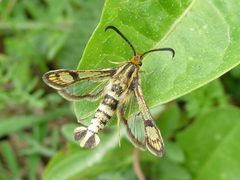
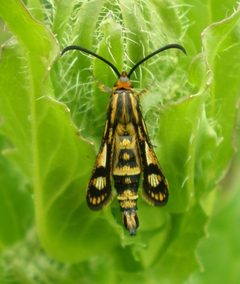
Chamaesphecia empiformis is a clearwing moth in the Sesiidae, commonly known as the cypress spurge clearwing. It is found across Europe and is strongly similar in appearance to Chamaesphecia tenthrediniformis, with which it has sometimes been synonymized. The is associated with cypress spurge as its larval plant.
Pronunciation
How to pronounce Chamaesphecia empiformis: //ˌkeɪ.məˈspiː.si.ə ˌɛmpɪˈfɔːr.mɪs//
These audio files are automatically generated. While they are not always 100% accurate, they are a good starting point.
Identification
Difficult to distinguish from Chamaesphecia tenthrediniformis by external alone; some sources have treated both as . Forewing length 6–10 mm provides a measurable character. Genitalia examination or molecular methods may be required for definitive identification.
Images
Appearance
Forewing length 6–10 mm. Clearwing moths with transparent wings due to reduced scaling, a characteristic of the Sesiidae. Strongly resembles Chamaesphecia tenthrediniformis in overall .
Distribution
Europe; recorded from Belgium and other European countries. GBIF records indicate presence in the Palearctic region.
Seasonality
fly from May to August, with timing varying by location.
Diet
Larvae feed on cypress spurge (Euphorbia cyparissias). feeding habits not documented.
Host Associations
- Euphorbia cyparissias - larval food plantcypress spurge
Life Cycle
Larval stage feeds internally on plant; and other developmental details not documented in available sources.
Similar Taxa
- Chamaesphecia tenthrediniformisStrong external morphological similarity; historically synonymized with C. empiformis by some sources. Reliable separation requires detailed examination.
More Details
Taxonomic uncertainty
Some sources classify C. empiformis and C. tenthrediniformis as a single , indicating unresolved taxonomic boundaries.