
Carmenta pallene
(Druce, 1889)
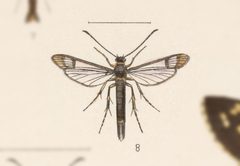
Carmenta pallene is a clearwing moth in the Sesiidae, described by Herbert Druce in 1889 from specimens collected in Tabasco, Mexico. The is also known from Arizona in the United States. Like other members of its , it exhibits the characteristic -mimicking appearance of sesiid , with reduced wing scaling that leaves much of the wing transparent. The original description and limited subsequent records provide sparse information on its and .
Pronunciation
How to pronounce Carmenta pallene: //kɑːrˈmɛn.tə pəˈliː.niː//
These audio files are automatically generated. While they are not always 100% accurate, they are a good starting point.
Identification
As a member of Sesiidae, Carmenta pallene possesses the 's diagnostic clearwing : wings with reduced , leaving broad transparent areas; narrow, elongated wings; and a -like body form. Specific distinguishing features from are not documented in available sources. Identification to level requires examination of genitalia or reference to the original description by Druce (1889).
Images
Distribution
Known from Tabasco, Mexico (type locality) and Arizona, United States. GBIF records indicate presence in both Nearctic and Neotropical regions.
Similar Taxa
- Carmenta wildishorumAnother North American Carmenta with overlapping geographic range (Arizona/New Mexico region), distinguished by more recent description and specific morphological details not applicable to C. pallene.
- Other Sesiidae speciesClearwing moths share the diagnostic transparent wing areas; C. pallene is distinguished by specific wing venation and body proportions described by Druce (1889).
More Details
Nomenclatural history
Originally described as Aegeria pallene by Druce in 1889, later transferred to Carmenta. The basionym Aegeria pallene reflects historical classification within a broader concept of the sesiid group.
Data limitations
Despite being described in 1889, C. pallene remains poorly known. No iNaturalist observations are recorded, and biological data ( plants, stages, ) are absent from available literature.