
Comadia manfredi
Neumann, 1884
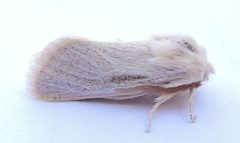
Comadia manfredi is a small cossid described by Neumann in 1884. It is characterized by plain cream-colored wings without markings and a forewing length of approximately 11 mm. The exhibits a disjunct distribution pattern, occurring in the southwestern United States (Arizona and New Mexico) as well as in Ohio. show geographic variation in period, with activity in April–May in the south and July–August in Ohio.
Pronunciation
How to pronounce Comadia manfredi: /koʊˈmeɪdiə ˈmænfrɛdi/
These audio files are automatically generated. While they are not always 100% accurate, they are a good starting point.
Identification
Distinguished from other Comadia and similar cossid by the combination of small size (forewing ~11 mm), completely unmarked cream wings, and geographic location. The absence of any wing patterning is notable within a that often features spotted or streaked forewings. Disjunct distribution between the Southwest and Ohio may help separate from look-alike species with more continuous ranges.
Images
Appearance
Small with forewings approximately 11 mm in length. Forewings and hindwings are uniformly cream-colored without any markings, patterns, or spots. Wing coloration is plain and unornamented.
Distribution
Recorded from Arizona and New Mexico in the southwestern United States, with a disjunct in Ohio. The geographic separation between these regions suggests possible specialization or under-sampling of intermediate areas.
Seasonality
active April to May in Arizona and New Mexico; July to August in Ohio. This latitudinal difference in period likely reflects phenological responses to regional climate conditions.
More Details
Taxonomic note
Authorship is Neumann, 1884. The is placed in tribe Cossini within Cossinae. The disjunct distribution pattern (Southwest + Ohio) is unusual and may warrant further investigation into whether these represent a single species or cryptic .