
Choreutis pariana
(Clerck, 1759)
apple leaf skeletonizer moth, apple-and-thorn skeletonizer
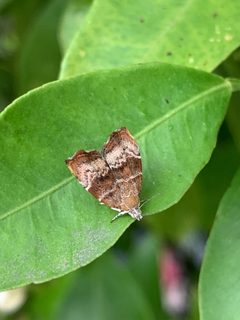
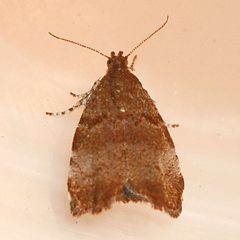
Choreutis pariana is a small in the Choreutidae, native to Eurasia and introduced to North America in 1917. The is known for its larval feeding that creates distinctive skeletonized leaves on plants. have a wingspan of 11–15 mm and typically display brownish coloration with banded wing patterns. The species has experienced significant taxonomic confusion due to multiple historical generic reassignments.
Pronunciation
How to pronounce Choreutis pariana: /kɔˈre.u.tɪs pæˈri.a.nə/
These audio files are automatically generated. While they are not always 100% accurate, they are a good starting point.
Identification
require genital examination for definitive separation from due to similar wing maculation. Larvae distinguished by skeletonized feeding damage leaving lower leaf intact as brown blotches. Larval pinacula with dark brown coloration and uniordinal arrangement on narrow are consistent features.
Images
Habitat
Found in agricultural areas, orchards, and wooded supporting plants. Larvae feed on leaf uppersides beneath silken webbing.
Distribution
Native to Eurasia from Japan to Ireland. Introduced to North America: New England (first recorded 1917), West Coast of United States, and Canada (British Columbia, Ontario, New Brunswick, Nova Scotia, Prince Edward Island, Newfoundland and Labrador). Also recorded in Korea.
Seasonality
North America: larvae June to early September; late July to late October. Britain: larvae May–June and August; adults in two with in July and September, and reappearing early spring. Western Europe: with adult flight in July and September.
Diet
Larvae feed on leaf parenchyma of crab apples (Malus), hawthorns (Crataegus), paper birches (Betula papyrifera), Betula dahurica, willows (Salix), cherries (Prunus), whitebeams (Sorbus), ashes (Fraxinus), roses (Rosa), and alders (Alnus). Feeding occurs under silken web on leaf upperside, leaving lower intact.
Host Associations
- Malus - larval food plantcrab apples
- Crataegus - larval food planthawthorns
- Betula papyrifera - larval food plantpaper birch
- Betula dahurica - larval food plant
- Salix - larval food plantwillows
- Prunus - larval food plantcherries
- Sorbus - larval food plantwhitebeams
- Fraxinus - larval food plantashes
- Rosa - larval food plantroses
- Alnus - larval food plantalders
Life Cycle
Complete . not described in sources. Larvae feed under silken webbing, pupate in silk cocoon attached to leaf underside. Two per year in Western Europe; single or partial second generation in parts of North America. occurs as in Western Europe.
Behavior
Larvae construct fine silken webs on leaf uppersides for protection while feeding. Feeding produces characteristic skeletonized leaves with intact lower . are active fliers with or partially bivoltine depending on region.
Ecological Role
Leaf-feeding herbivore that skeletonizes foliage of diverse woody plants. Role in natural not well documented; in agricultural settings, minor pest of orchard and ornamental trees.
Human Relevance
Minor agricultural and ornamental pest causing aesthetic damage to leaves. reflects association with apple . Subject of taxonomic confusion in historical literature due to multiple generic reassignments.
Similar Taxa
- Choreutis nemorana with similar larval skeletonizing on fig; maculation also requires genital examination for separation
- Other Choreutis speciesWing patterns confusingly similar; definitive identification requires examination of genitalia
More Details
Taxonomic history
Subject to extensive nomenclatural confusion over 150 years. Previously placed in Eutromula, Hemerophila, Orchemia, and Simaethis, which are now recognized as separate genera or synonyms.
Introduction history
First recorded in North America in New England in 1917; subsequently spread to Pacific coast and across Canadian provinces.