
Carposina ottawana
Kearfott, 1907
American Peach Fruit Moth
Species Guides
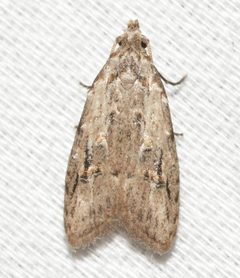
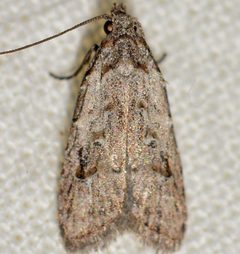
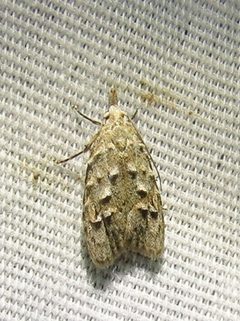
1Carposina ottawana is a North American in the Carposinidae. It is commonly known as the American Peach Fruit Moth. The species was described by Kearfott in 1907 and is distinct from the Asian peach fruit moth Carposina sasakii, with which it shares a but not a geographic range. It belongs to a family whose larvae are typically internal feeders in fruits and seeds.
Pronunciation
How to pronounce Carposina ottawana: //ˌkɑr.pəˈsiː.nə ˌɒ.təˈweɪ.nə//
These audio files are automatically generated. While they are not always 100% accurate, they are a good starting point.
Identification
Distinguished from the Asian Carposina sasakii by its North American distribution. As with other Carposina , are small with relatively plain, often brownish or grayish coloration. Specific diagnostic features for separating C. ottawana from other North American Carposina species require examination of genitalia or molecular data.
Images
Distribution
North America: recorded from Vermont, United States. The specific epithet "ottawana" suggests a possible association with the Ottawa region, though this requires verification.
Human Relevance
The "American Peach Fruit " suggests potential association with peach , though the extent of economic impact is not well documented. Not to be confused with Carposina sasakii, a significant agricultural pest in Asia.
Similar Taxa
- Carposina sasakiiShares "peach fruit " but is to Asia (Japan, Korea, China, Russia); distinguished by geography and likely genetic differentiation
- Other Carposina speciesMorphologically similar small carposinid ; require detailed examination for definitive identification