
Paratrea
Grote, 1903
plebeian sphinx moth (sole species)
Species Guides
1- Paratrea plebeja(Trumpet Vine Sphinx)
Paratrea is a in the Sphingidae, erected by Augustus Radcliffe Grote in 1903. Its sole , Paratrea plebeja (plebeian sphinx moth), was described by Fabricius in 1777. The genus is restricted to North America, with its single species occurring in the eastern United States and westward to the Great Plains.
Pronunciation
How to pronounce Paratrea: //ˌpærəˈtriːə//
These audio files are automatically generated. While they are not always 100% accurate, they are a good starting point.
Identification
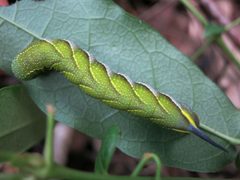
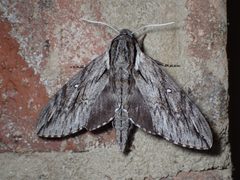
Paratrea can be distinguished from other sphingid by its status and the characteristics of its sole . Paratrea plebeja has forewings measuring 31–35 mm in length. As the only member of this genus, identification relies on species-level traits of P. plebeja.
Images
Habitat
Associated with areas supporting plants of its larval stage, including trumpet creeper (Campsis radicans) and related Bignoniaceae. frequent flowering plants for nectar.
Distribution
Eastern United States, extending westward to Nebraska, Kansas, Oklahoma, and eastern Texas. The sole occupies this range across the eastern U.S. and Great Plains region.
Seasonality
activity varies by latitude. Northern : May to August, two . Southern populations: late April to June and August to October, at least two generations. Florida: April to November. Louisiana: March to September.
Diet
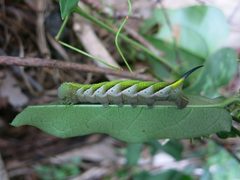
feed on nectar of various flowers including Saponaria officinalis, Phlox, Petunia, Mirabilis, Lonicera, Hymenocallis occidentalis, and Verbena. Larvae feed on Campsis radicans, Tecoma stans, and introduced Tecomaria capensis.
Host Associations
- Campsis radicans - larval
- Tecoma stans - larval
- Tecomaria capensis - larval introduced
- Saponaria officinalis - nectar source
- Phlox - nectar source
- Petunia - nectar source
- Mirabilis - nectar source
- Lonicera - nectar source
- Hymenocallis occidentalis - nectar source
- Verbena - nectar source
Life Cycle
Multivoltine with two or more per year depending on latitude. Northern regions show two generations; southern regions show at least two generations with extended periods.
Behavior
are or , visiting flowers for nectar. periods vary regionally, with extended activity in southern portions of the range.
Ecological Role
function as of various flowering plants. Larvae are herbivores feeding on woody vines and shrubs in the Bignoniaceae.
Similar Taxa
- Other Sphingidae generaParatrea is , distinguished from other sphingid by having only one ; identification to genus level requires recognition of P. plebeja specifically.
More Details
Taxonomic history
erected by Augustus Radcliffe Grote in 1903. The sole , originally described as Sphinx plebeja by Fabricius in 1777, was later transferred to this genus.
Monotypy
Paratrea is one of several within Sphingidae, representing a lineage with no known additional .