
Manduca jasminearum
Guérin-Méneville, 1832
Ash Sphinx
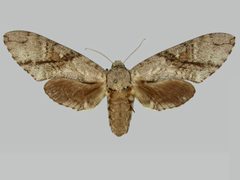
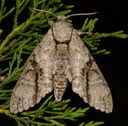
Manduca jasminearum, commonly known as the ash sphinx, is a sphinx moth in the Sphingidae. have a wingspan of 84–105 mm and are active from May to September with two per year. The is distributed east of the Mississippi River to the Atlantic Ocean, with greatest abundance in the northeastern United States. Larvae feed primarily on ash species (Fraxinus), with occasional records from Syringa and Ulmus.
Pronunciation
How to pronounce Manduca jasminearum: //ˈmæn.djukə ˌdʒæs.məˈneɪ.rəm//
These audio files are automatically generated. While they are not always 100% accurate, they are a good starting point.
Identification
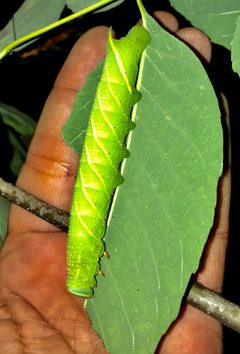
can be distinguished from other Manduca by their distribution range and . The wingspan of 84–105 mm falls within the range typical for the . Larval identification relies on plant association with Fraxinus species; the caterpillar likely shares the green coloration and horn characteristic of Manduca hornworms, though specific markings distinguishing it from are not documented in available sources.
Images
Habitat
Associated with supporting ash (Fraxinus), which serve as the primary larval . Specific habitat preferences for beyond nectar sources are not documented.
Distribution
East of the Mississippi River to the Atlantic Ocean; common in the northeastern United States.
Seasonality
Two per year; fly from May to September.
Diet
feed on nectar from flowers. Larvae primarily feed on ash (Fraxinus); also observed consuming Syringa and Ulmus species.
Host Associations
- Fraxinus - primary larval
- Syringa - occasional larval observed but not primary
- Ulmus - occasional larval observed but not primary
Life Cycle
Two per year. stage not explicitly documented in available sources, though pupal is typical for temperate Manduca .
Behavior
are and attracted to flowers for nectar. Larval includes feeding on foliage of plants.
Ecological Role
may contribute to pollination of tubular flowers while feeding on nectar. Larvae function as herbivores on woody plants, particularly ash.
Human Relevance
Not considered an agricultural pest; plants are primarily native trees rather than crops. No significant economic impact documented.
Similar Taxa
- Manduca sextaSimilar size and general appearance, but distinguished by larval plants (Solanaceae including tobacco and tomato) and more southerly/westerly distribution
- Manduca quinquemaculataSimilar size and appearance, but larval are Solanaceae (tomato, potato, eggplant) and distribution patterns differ
- Other Manduca speciesShare larval and sphinx moth form; identification requires plant association and geographic range
Sources and further reading
- BugGuide
- Wikipedia
- GBIF taxonomy match
- iNaturalist taxon
- NCBI Taxonomy
- Catalogue of Life
- The Hornworms Are Not Your Friends | Bug Squad
- California Dogface Butterfly Steals the Show | Bug Squad
- Insect FAQs | Entomology Research Museum
- Tough to be a hornworm: Tomato and tobacco hornworms, Manduca quinquemaculata and M. sexta — Bug of the Week
- Advanced Morphology Techniques Reveal Tobacco Hornworm's Secrets
- Scientists Sequence the Genome of the Tobacco Hornworm