
Xylophanes tersa
Linnaeus, 1771
Tersa Sphinx
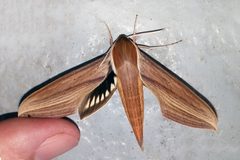
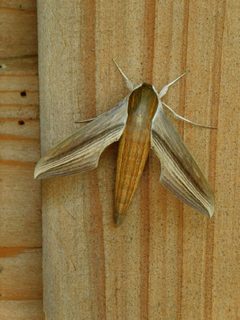
Xylophanes tersa, commonly known as the tersa sphinx, is a in the Sphingidae first described by Carl Linnaeus in 1771. It occurs across a broad geographic range from the eastern and central United States through Mexico, the West Indies, Central America, and into South America. The is notable for its distinctive wing pattern and is recognized as a with documented larval associations with multiple plant .
Pronunciation
How to pronounce Xylophanes tersa: //ˌzaɪloʊˈfeɪniːz ˈteɹsə//
These audio files are automatically generated. While they are not always 100% accurate, they are a good starting point.
Images
Distribution
United States (Massachusetts south to southern Florida, west to Nebraska, New Mexico and southern Arizona), Mexico, the West Indies, Central America, and South America (Bolivia, Paraguay, Argentina, Brazil). Occasional strays recorded as far north as Canada.
Diet
Larvae feed on Borreria, Catalpa, Manettia, and Pentas , as well as Spermacoce glabra, Hamelia patens, Hedyotis nigricans, Heimia salicifolia, Psychotria , Psychotria nervosa, and Inga vera.
Host Associations
- Borreria - larval food plant
- Catalpa - larval food plant
- Manettia - larval food plant
- Pentas - larval food plant
- Spermacoce glabra - larval food plant
- Hamelia patens - larval food plant
- Hedyotis nigricans - larval food plant
- Heimia salicifolia - larval food plant
- Psychotria microdon - larval food plant
- Psychotria nervosa - larval food plant
- Inga vera - larval food plant
Ecological Role
function as ; larvae are herbivores on diverse flowering plants.
More Details
Subspecies
Two recognized: Xylophanes tersa tersa (nominate) and Xylophanes tersa chaconi De Marmels, Clavijo & Chacín, 1996 (Venezuela).